In 30 seconds
- 1
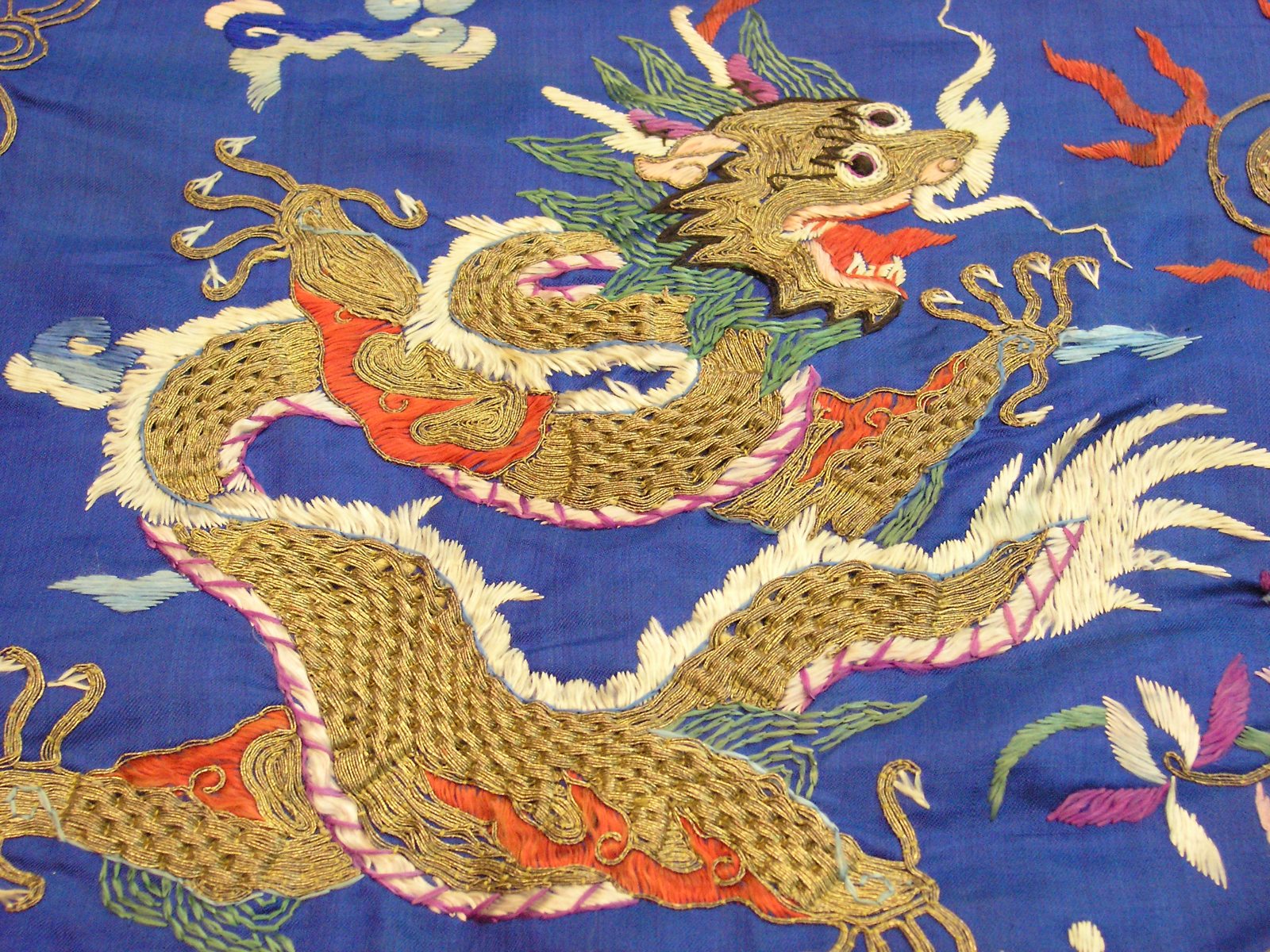
Start with a whole robe, then see how dragons, clouds, flowers and borders are arranged. A pattern has meanings, but also a material, a position and a date.
- 2
Trace three decorative zones in the air, without touching the glass, and identify the first to catch your eye.
- 3
Find two clouds and compare direction, size and the gaps they leave.
A way into the subject
The easiest mistake is to treat traditional patterns as a permanent code: dragon equals emperor, flower equals wealth. Meaning depends on the wearer, occasion, technique and period. The Palace Museum’s blue kesi robe with gold dragons, clouds and bats is documented as a Qianlong-period imperial festive robe made by the Suzhou weaving office. It is a specific example, not a rule for every dragon textile. Read the object name, date and function before interpreting its decoration.
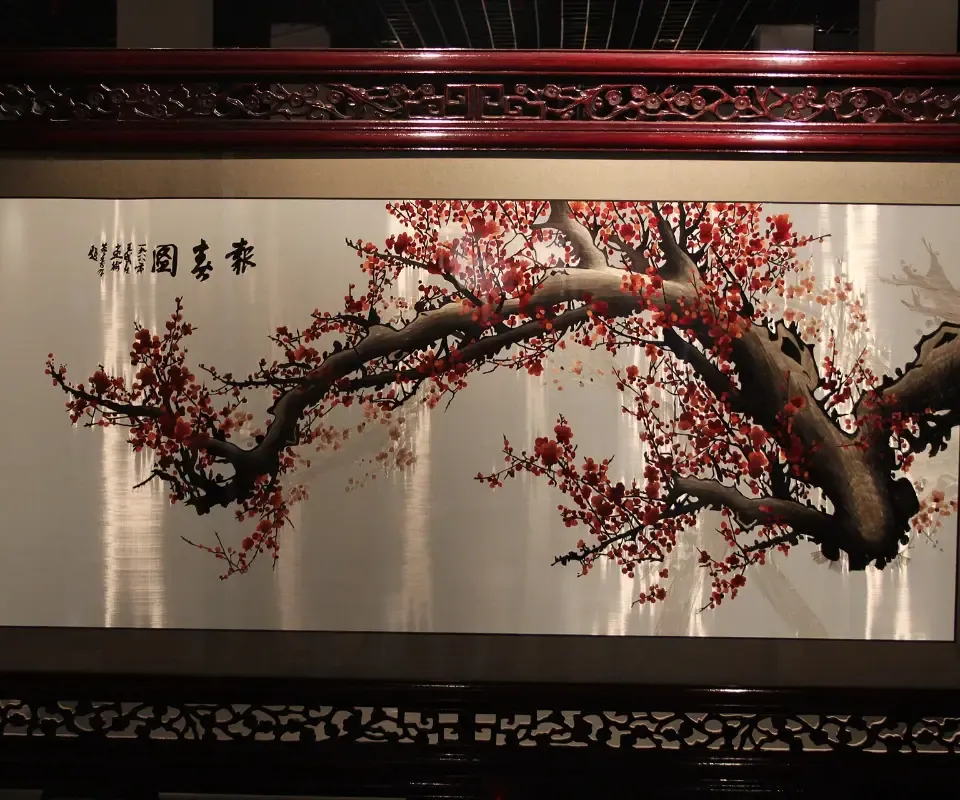
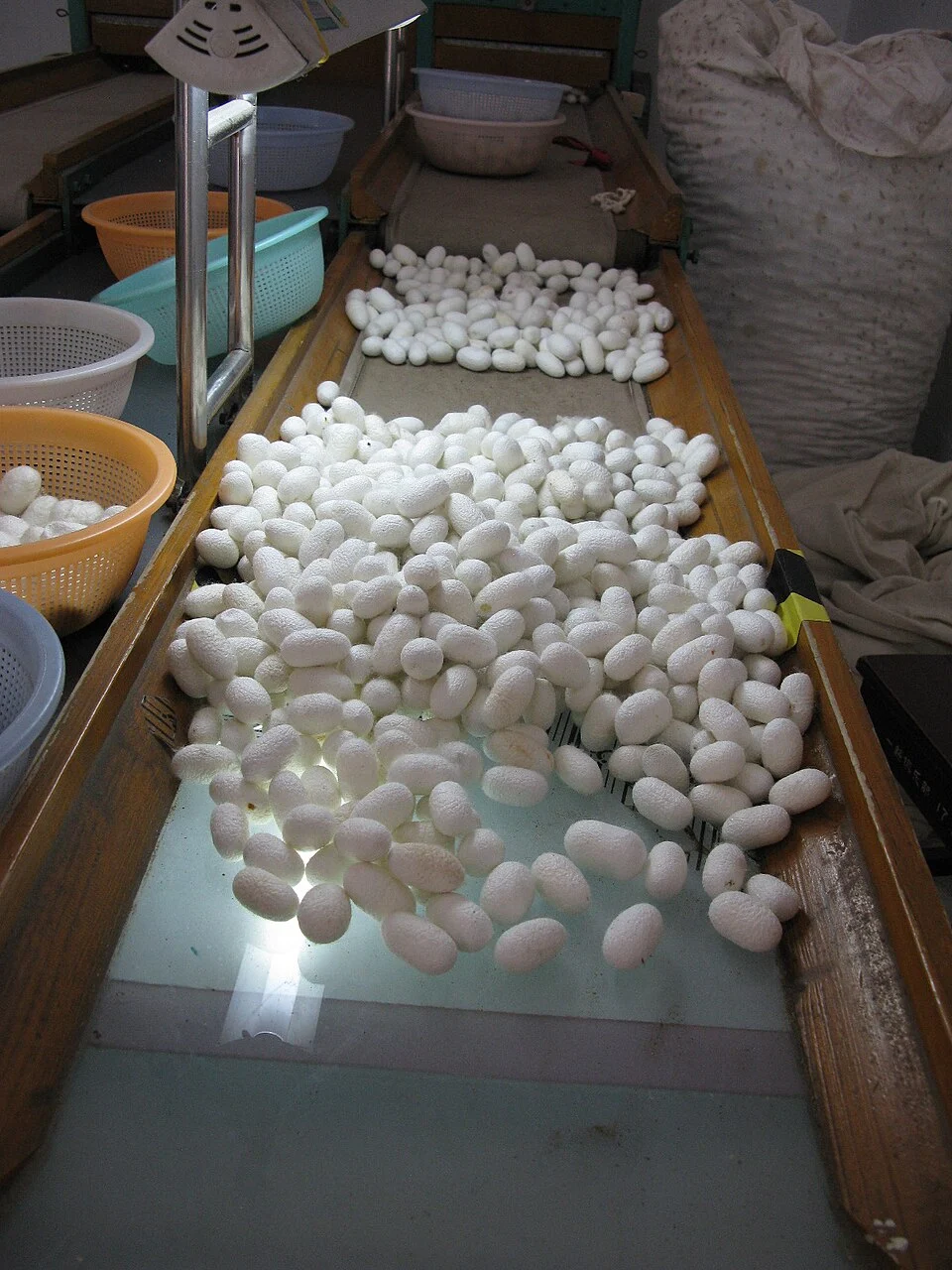
An object has both imagery and structure. Brocade develops patterns during weaving; embroidery adds threads to an existing cloth; kesi builds the image with separate coloured wefts. The same subject can therefore have different outlines, colour transitions and reflections. The Palace robe uses several gold threads for dragons and the twelve emblems, while its lining has scrolling chrysanthemums. At Hangzhou’s silk museum, compare different fabrics: you are seeing both a story and a maker’s solution to surfaces, edges and repetition.
On the spot
01
The whole garment before one dragon
Where to standWhere the full garment is visible.
Chest, back, shoulders, sleeves and hem are different surfaces. A body bends, a fastening overlaps and sleeves move; decoration works with those changes. A central motif can establish balance while borders define neck and cuffs. Do not infer status from an isolated detail: first see groups and symmetry, then check the label.
NoticeTrace three decorative zones in the air, without touching the glass, and identify the first to catch your eye.
02
Clouds give empty space direction
Where to standAround dragons and shoulders.
Clouds do more than fill gaps. They surround main motifs, lead the eye and connect scattered images. The direction and size of curls change the rhythm. Ignore the dragon for a moment and look at clouds and gaps: spacing, rather than sheer quantity, can establish order. Darkened colour and dulled metal threads also affect the present view.
NoticeFind two clouds and compare direction, size and the gaps they leave.
03
Sprigs and scrolling stems
Where to standFloral textiles or collection images.
Scrolling stems organise flowers and leaves continuously, useful for borders or a broad surface. A flower sprig is a more independent unit. Ask not only which flower it is but how it repeats: one direction, staggered rows, or within roundels. A seam cutting across a motif reminds you that fabric existed as material before it became a garment.
NoticeChoose a patch, identify its smallest repeating unit and imagine it covering the cloth.
04
Meaning needs context
Where to standBetween the label, function and decoration.
The bat–blessing sound association and the ranked twelve emblems have historical contexts. Those emblems include sun, moon, stars, mountain and dragon, rather than a random collection of auspicious motifs. Keep a question when a tiny motif is unclear. Contemporary scarves and museum products can borrow old compositions while changing wearer, function and production.
NoticeRecord one interpretation supported by a label and one unconfirmed guess.
How the tradition reaches the present
Patterns change with technology, exchange, taste and clothing regulations. A garment displayed flat is easy to study but loses bodily movement; a magnified digital detail reveals stitches but can conceal overall scale. Ask the same questions of contemporary design: what remains, what is enlarged or simplified, and whether the material changes. A new work need not claim to reproduce an old clothing system unchanged.
Going further
Before you go
- Admission
- Public exhibitions are free; individuals need no online reservation and register with identity on arrival.
- What to look for
- Choose two textiles made with different techniques in the permanent displays; clothing exhibits rotate, and Palace Museum collection images can be read online.
Being a good guest
- Do not lean on cases or use flash on textiles.
- Follow photography signs and leave others a view.
- Do not treat wearers of ethnic or historical clothing as pattern specimens.
- Ask about material and technique when buying reproductions; symbolism is not a quality test.