In 30 seconds
- 1
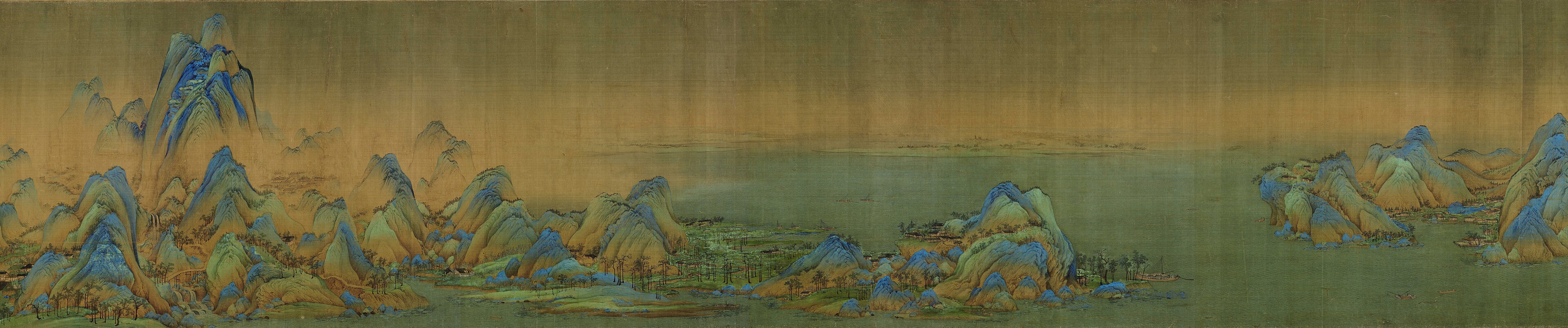
The original is an almost twelve-metre painted silk handscroll; a detail cannot replace its full structure.
- 2
Bridges, houses, boats and people among mountains and water make landscape a place of habitation and movement.
- 3
The painting is not a panorama from one lookout and should not be used to locate a single photographic viewpoint.
A landscape unfolded in sections
The Palace Museum attributes the Northern Song painted silk handscroll to Wang Ximeng, measuring 51.5 by 1191.5 centimetres. Cai Jing’s colophon supplies the year 1113, an age of eighteen and information about training, without establishing a full biography. Read the work with that evidence rather than treating the widely repeated story of an early death as confirmed.
A handscroll’s length gives viewing a temporal dimension: peaks, water, bridges and buildings emerge in successive combinations, with attention moving among distances. A screen thumbnail shows the whole strip but shrinks the details of dwelling, movement and work. Alternate overall rhythm with one enlarged section. This requires neither memorised terminology nor real-place names for every mountain.
On the spot
01
Blue and green are pictorial choices
Where to standThe Palace Museum’s official full-scroll and detail views.
Separate coloured mountain masses, paler water and finely outlined buildings. Ask how colour organises weight, distance and rhythm. The museum places the work within the blue-green landscape tradition; this does not mean every Song mountain looked that colour. Consider how colour directs attention, creates masses and reveals small features rather than simply judging realism. Screen colour cannot substitute for study of original materials.
NoticeChoose a meeting of mountain, water and buildings and describe how colour differentiates them.
02
Small figures give landscape scale
Where to standA digital detail showing figures and boats.
Find a figure, path or boat, then zoom out to its enclosing mountains. Proportion creates grandeur while allowing imagined entry. Not every tiny figure has an identifiable occupation: action, placement and interpretation matter before calling someone a recluse or fisherman. Ask where people are and how they could move, making the landscape a space of routes and pauses.
NoticeSketch one figure’s size relative to nearby mountain, water or buildings.
03
A bridge connects pictorial areas
Where to standA digital section connecting bridges, paths and bank-side buildings.
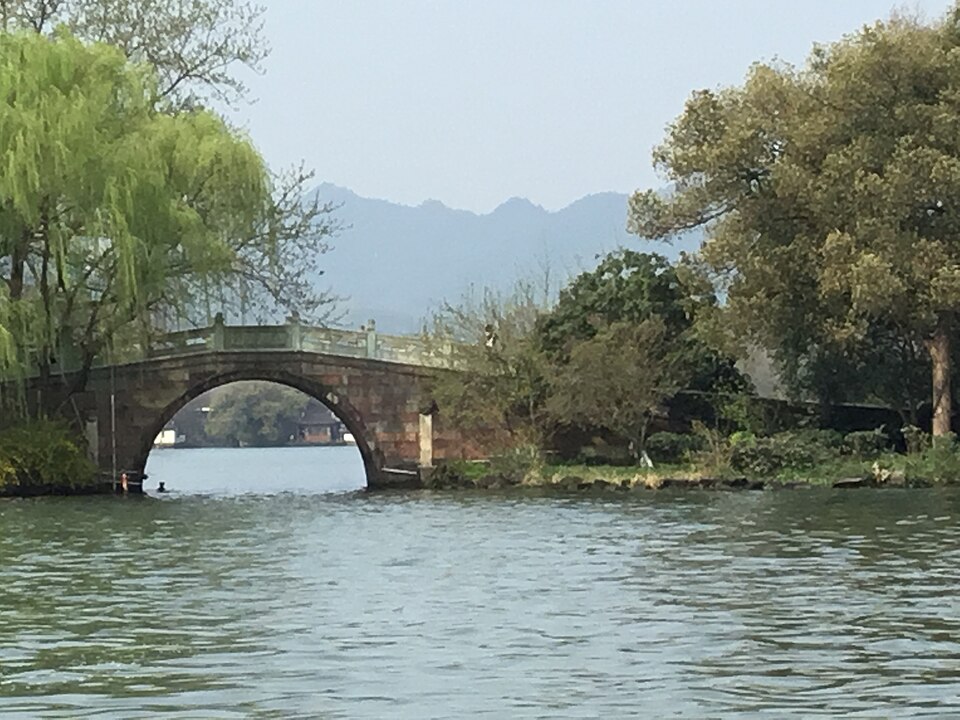
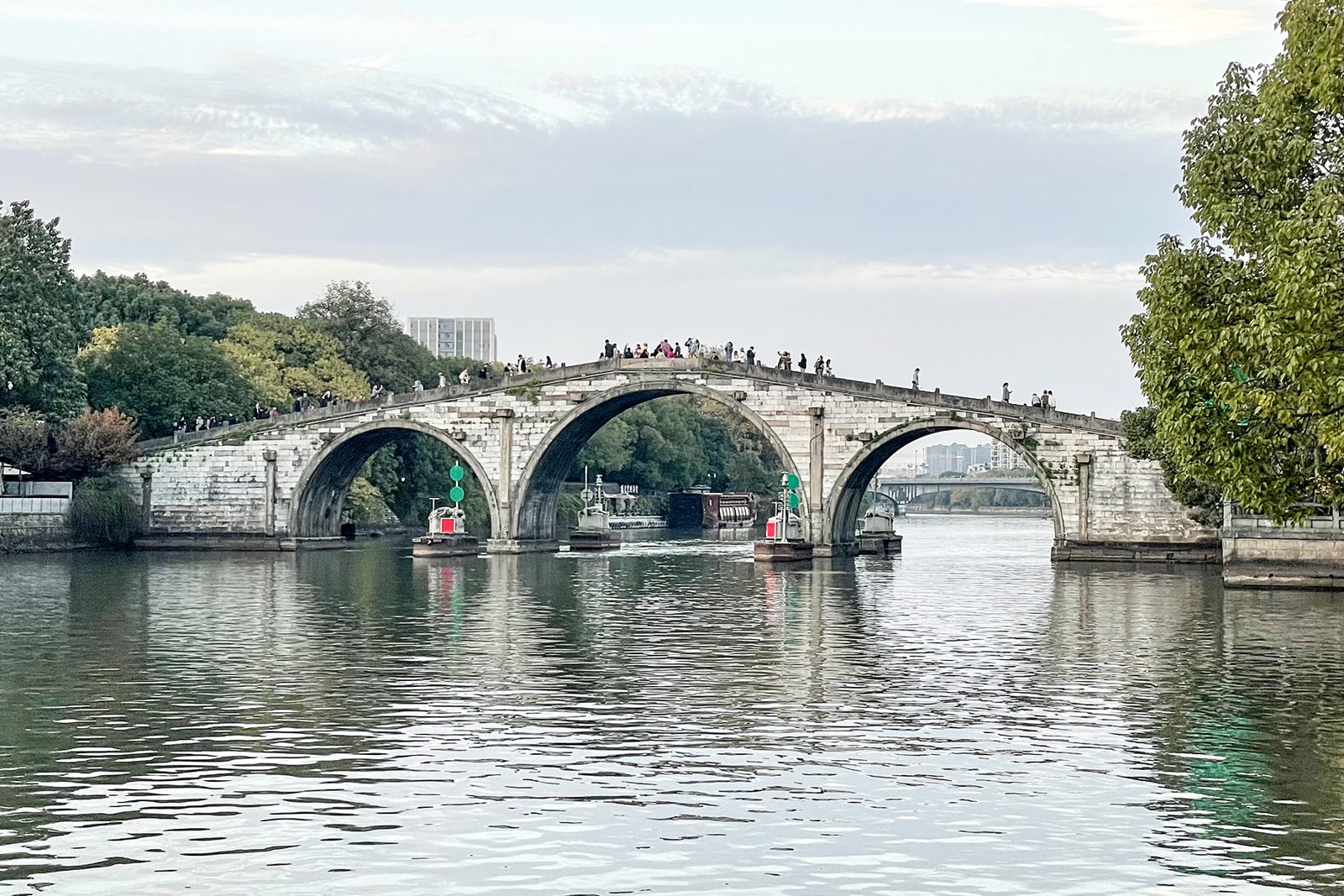
Trace a bridge to its ends, following paths into mountains and water beneath. It organises imagined passage and carries attention between areas, while boats connect land and water movement. These are pictorial relationships, not a scale navigation map. Treat a bridge as a hinge of viewing to see how small architecture helps organise the larger landscape.
NoticeFollow a bridge visually and explain which areas it connects without relying on the title.
04
Read a section, then return to the whole
Where to standA full digital scroll, then an open lakeshore or garden path.
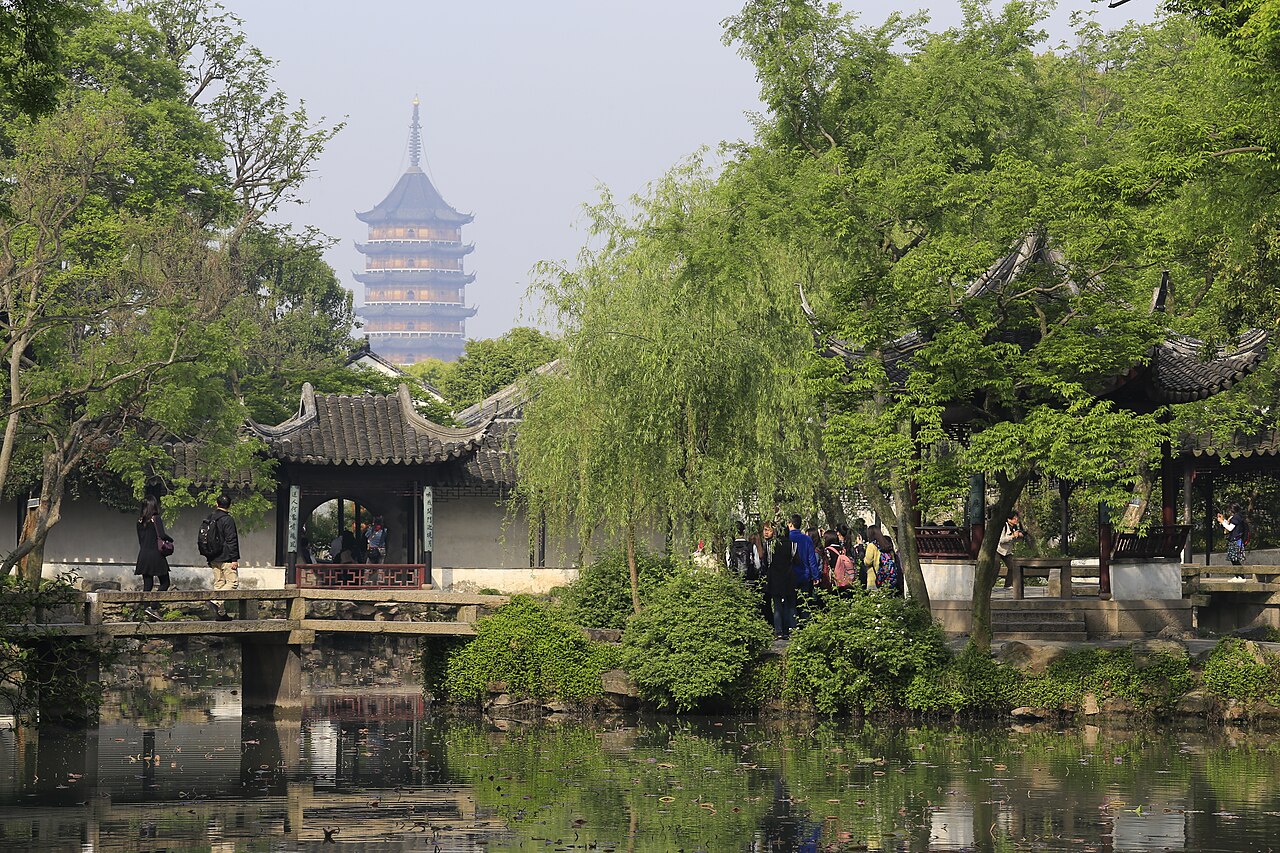
Read screen-width sections and compare their mountains, water and buildings with adjacent transitions. Back on a real shore, moving changes relationships between nearby trees and distant hills, with concealment and revelation producing successive views. Garden windows and doors deliberately frame such encounters. Painting and garden are different, but moving attention offers a comparison beyond seeking a single picturesque photograph.
NoticeWalk ten slow steps in a real landscape and note one object concealed and revealed.
From screen viewing back to your own movement
Digital collections bring details into public life, while contemporary stage and design works borrow blue-green imagery. Distinguish original painting, reproduction and adaptation to understand reuse. A modern costume colour cannot establish Song clothing or a painter’s biography; each material needs its own evidence.
Conservation means the original is not permanently displayed; visiting Beijing does not guarantee seeing it. Digital study can prepare a West Lake or Suzhou garden walk: which small features give scale, and where does a bridge or doorway redirect attention? Carrying questions from the painting into real scenery keeps cultural reading from ending at the screen.
Going further
Before you go
- Digital viewing
- Read the scroll through the Palace Museum’s digital collection; a Beijing admission ticket is not required.
- Original display
- The original is not permanently displayed. If travelling specifically for it, confirm that a current exhibition lists the scroll.
- Suggested viewing time
- Spend 15–20 minutes on the full scroll and two details, then carry the observations to a lakeside or garden walk.
Being a good guest
- Follow museum flash restrictions and do not touch cases.
- Identify artwork and collection when copying or sharing an image, and label a detail as a detail.
- Do not lean on lattice windows, historic woodwork or rails for garden photographs.
- Step aside while comparing views on shores or bridge approaches and leave passage clear.