In 30 seconds
- 1
Tying and stitching come before dyeing; white is an intentional result.
- 2
Blue and white alone cannot prove plant dye or hand production.
- 3
Zhoucheng is a living, working village; workshops are only part of it.
The stitching before the surface
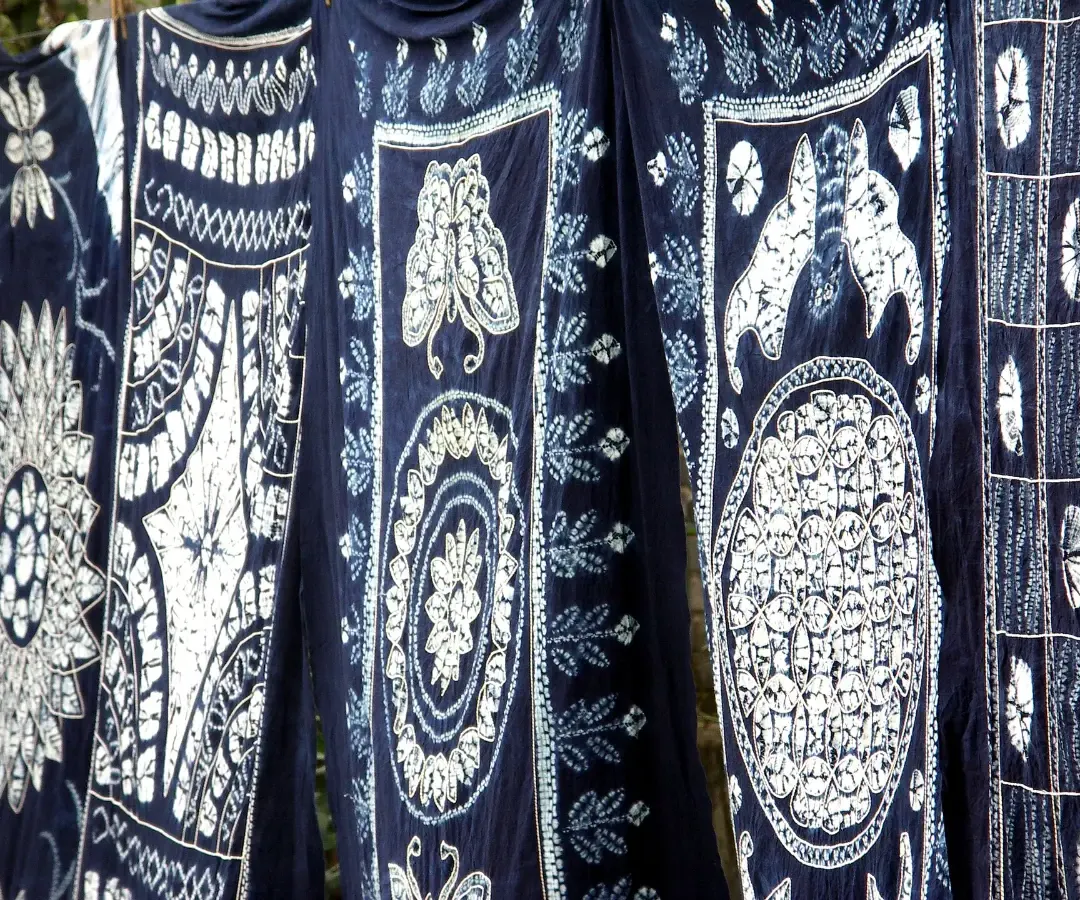
Dali’s official account links resist tying on pale cloth with indigo dyeing. Tight areas limit access by the dye, then open into a blue-and-white design. Zhoucheng techniques involve more than one knot: stitching, folds and different gathering methods produce dots, lines and larger reserves. The image first exists within a compressed three-dimensional bundle, becoming a visible surface only after release. Spatial work and design are inseparable.
Transmission involves household labour, material knowledge and commercial production. Traditional accounts emphasise plant indigo, but cannot establish the dye used in every blue cloth sold today. Ask the actual maker about process and dye source. Heritage recognition protects knowledge and transmission rather than guaranteeing every shop. Consider connections between making, purchasing, display and sale: the journey from worktable to your luggage is part of the cultural story.
On the spot
01
Look at the gathered volume
Where to standA workshop tying table open to visitors.
Before dyeing, marked or stitched cloth can be drawn into gathered bundles. Stitch direction and tightening determine which areas will remain pale and which can contact dye. This is not an uninteresting preliminary to the vat: major design decisions occur here. If invited to make a sample, record its gathered state and compare it afterwards. That explains how a hand movement becomes a line, instead of leaving the final pattern as an unexplained surprise.
NoticePredict the shape one stitched line will leave after release.
02
Read the softened border
Where to standA dry, opened sample.
A resisted border can show gradual changes in colour, recording folds, tension and contact with dye. Study one flower’s edge rather than only a distant blue-and-white effect. Small variations do not automatically mean poor quality, but neither does every softened edge prove unique handwork. Compare similar designs and materials, then ask which stage accounts for the difference. Combine visual evidence with process rather than relying on a romantic claim about imperfection.
NoticeCompare the blue tones at a flower’s centre and edge.
03
Ask about dye instead of guessing
Where to standVat displays, process descriptions and product labels.
Plant indigo requires preparation and suitable conditions; it is not simply blue flowers soaked in water. If a workshop describes a plant source, ask how it is prepared and whether this particular item uses it. Multicoloured products have their own purposes without matching an imagined ancient method. Establish whether claims match the work, and whether dyeing, rinsing and care are clearly explained. Observe the vat without reaching in to test its colour.
NoticeAsk which dye this cloth uses and how to wash it the first time.
04
Return the design to its use
Where to standHeadcloths, scarves, tablecloths and clothing.
Transferring a motif from a headcloth to a tablecloth changes scale, centre and borders. Ask whether it has an orientation, what folding hides and which borders remain visible in use. Motifs can have local associations, but listen to the maker rather than inferring a wearer’s identity from one pattern. Questions about design, tying and dyeing reveal collaboration instead of presenting the whole village as one uniform display.
NoticeImagine the cloth folded for use and see which elements remain visible.
Adapting skill to new orders
Tie-dye enters clothing, interiors, visitor lessons and contemporary art. Orders support income and change working rhythms. A short session introduces selected stages rather than a maker’s entire experience. Confirm time, cloth size, included steps and how the finished piece will be received; for products, read material and care details. Clear arrangements make visitor demand a fair transaction instead of requiring villagers to organise their lives around a photograph.
Going further
Before you go
- Participation
- Ask before entering production courtyards; agree on cloth, tying, dyeing and delivery after drying
- Buying
- Ask about maker, fibre, dye and care; pay for the selected product or lesson
Being a good guest
- Do not treat household drying areas as photo studios.
- Do not handle vats or threads without guidance.
- Ask before photographing people in Bai dress.
- Do not request free demonstrations; arrange a lesson first.