In 30 seconds
- 1
Do not expect a standing palace. Relate jade, earthen platforms, waterways and burials to understand how archaeology builds evidence.
- 2
Compare overall proportions with the finest line and imagine the control each requires.
- 3
From the path, compare two changes in ground level with the plan.
A way into the subject
The archaeological city dates approximately to 3300–2300 BCE and provides evidence for Late Neolithic urban and social organisation in the lower Yangtze. The World Heritage property includes the city, Yaoshan and high- and low-dam areas: a city was more than land within a wall. Rice cultivation, water engineering, differentiated burials and worked jade together support interpretations of an early regional state. These lines of evidence reinforce one another rather than making one attractive object prove an entire civilisation.
Begin at the museum, then connect object detail with landscape scale at the site. Jade, pottery and stone tools introduce materials and functions; ruins show how earthworks and water organised space. Models, digital reconstructions and original remains are different kinds of information. Models clarify relationships but are not surviving buildings. A slight rise in a grassy landscape may be closer to actual remains than a monumental reconstruction. Read whether a display is an original, replica or reconstruction.
On the spot
01
Square and round: workmanship first
Where to standA cong or bi display.
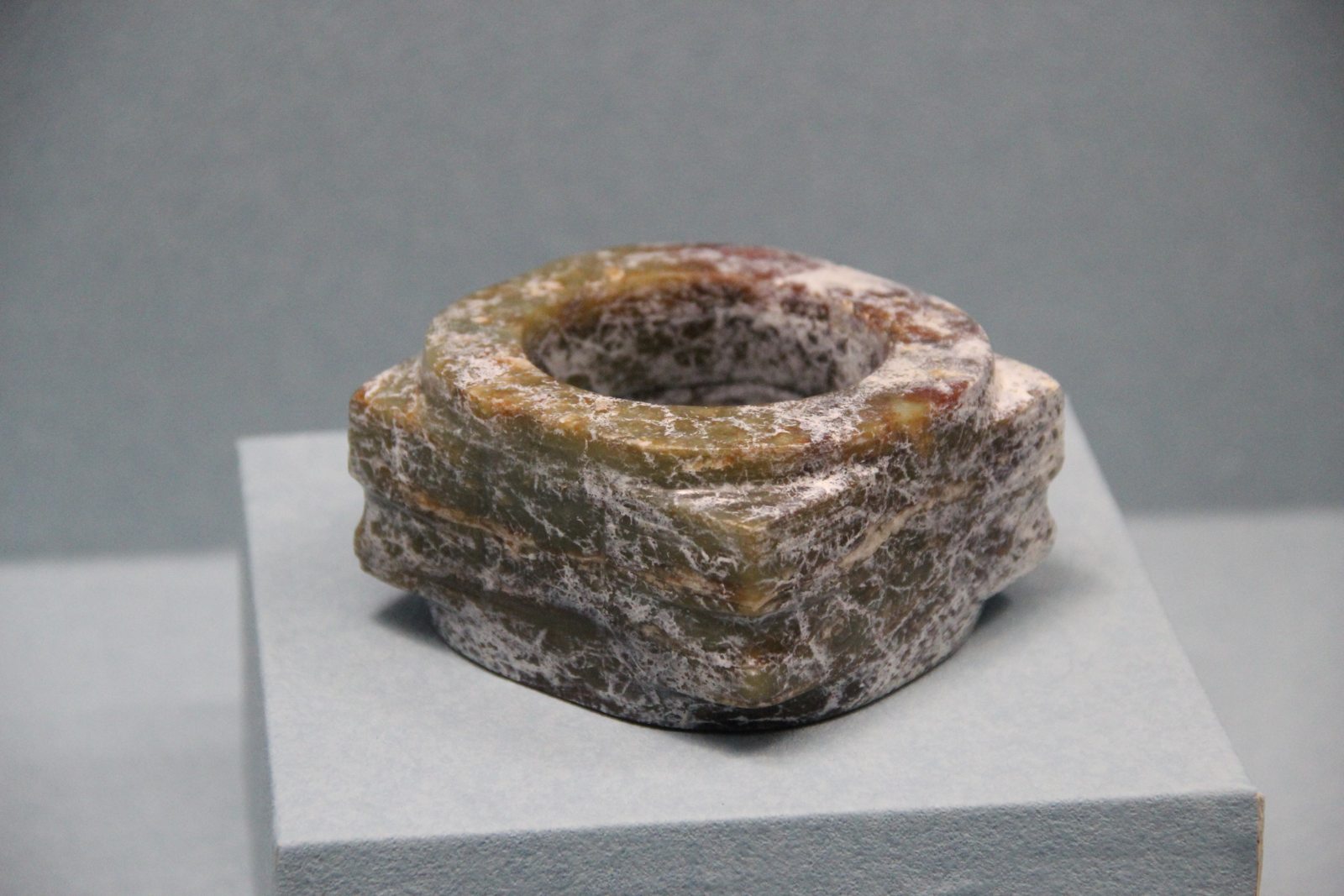
A cong typically combines a square exterior with a round bore, while a bi is a perforated disk. Establish shape before function. Bores and fine designs reveal time and skill, with processes explained by the museum. Do not assign a definite deity to a pattern without evidence; ritual use and complete iconographic meaning are different questions. Follow a turning line to make fine craftsmanship an observation.
NoticeCompare overall proportions with the finest line and imagine the control each requires.
02
Earthworks are not empty space
Where to standAn authorised observation platform.
Edges, elevation and relationships between platforms matter before imagined roofs. Buildings may be lost while subsurface structures and layers retain information. Compare signs with a plan, distinguishing original location, interpretive markers and modern paths. A quiet-looking site was not necessarily small. Preservation affects what is visible, and a taller reconstruction is not necessarily better evidence.
NoticeFrom the path, compare two changes in ground level with the plan.
03
A system beyond the walls
Where to standThe plan and water-engineering interpretation.
High and low dams may not be before your eyes but belong to the heritage. Relate foothills, plain and city, asking how engineering connected terrain rather than treating a landscaped channel as ancient. Systems require organisation, upkeep and long-term use, returning jade from isolated treasure to production and life. Two distant site areas may have been more closely related in operation than objects now in adjacent cases.
NoticeFind the city and two dam areas on a map and compare distance and terrain.
04
Hierarchy comes from comparison
Where to standBurial interpretation or assemblage diagrams.
An isolated jade becomes an art object, while an excavated assemblage helps discuss social differences. Compare quantity, types, burial size and location instead of inventing a personal legend. Cases may group by material, separating items originally buried together; excavation diagrams restore relationships. Recording find locations also avoids treating similar objects from different places or dates as one assemblage.
NoticeChoose an assemblage and record its find location, not only material and colour.
How the tradition reaches the present
Excavation, dating and material study deepen interpretation. Paths, planting and digital displays help park visitors while requiring a distinction between remains and interpretation. Liangzhu’s significance is not a ranking of earliest but how evidence relates urban space, production, belief and organisation. Revisit one question, such as engineering and city, through museum research. Keep evidence separate from imagination at the next archaeological site. Temporary exhibitions can also bring objects from different collections together, enabling comparisons a single museum cannot make.
Going further
Before you go
Being a good guest
- Stay on open paths outside protected excavation areas.
- Do not collect earth, fragments or plants.
- Do not touch cases or models and follow photography rules.
- Take care at changes of level and water.