In 30 seconds
- 1
Compare shoulder, waist and hem rather than letting a high slit stand for all qipao.
- 2
Examine the standing collar, front line, decorative knots and actual fastenings separately.
- 3
The Shanghai Museum qipao exhibition has ended; its official digital introduction remains useful before travel.
Several silhouettes in a modern city
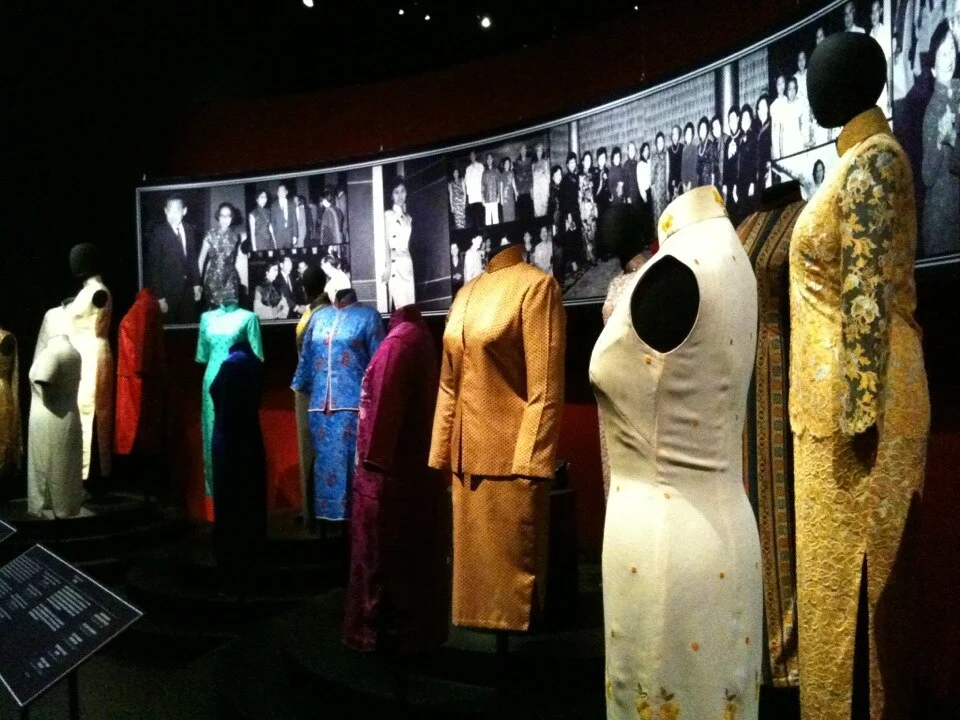
The timeline in Shanghai Museum’s exhibition, Chic Silhouettes: Shanghai Qipao and a Century of Fashion, moves the garment beyond a single film-poster image. Its materials describe fuller 1920s shapes, changing waist emphasis in the 1930s and continuing exchanges with Western cutting, sleeves and fabrics. These are interpretive clues rather than a formula that dates every garment. Clothing could be altered, photographs staged and private wardrobes used differently from advertising trends. Reading a label’s evidence and comparing actual objects is more reliable than assigning a decade from one attractive feature.
Qipao cannot represent what all Chinese women wore in every setting. Its popularity intersected with urban consumption, occupations, identity and individual choices. Beyond Shanghai, Hong Kong and Southeast Asian communities developed their own wearing histories. The photograph here comes from a Singapore museum, a useful reminder to examine particular wearers and collection contexts. A familiar collar can connect several cities without erasing differences in how people worked, attended occasions, preserved clothing and reused garments in distinct social environments.
On the spot
01
From shoulder through waist to hem
Where to standOfficial exhibition images and dated object photographs.
Start with the space between cloth and body, then compare the waist, shoulder and hem. Fuller robe-like shapes and fitted cuts allow different movement. Darts and seams can shape fabric around the body. Fullness does not imply insufficient skill, nor is tightness an inevitable improvement. For a commissioned garment, consider sitting, lifting your arms, walking and travelling in vehicles. Ask the maker to check these movements during fitting: the silhouette that works for one photograph may not suit an entire day.
NoticeCompare the widest and narrowest points of two garments.
02
Knotted decoration and working fastenings
Where to standA close image showing collar and front line.
Follow the front line to see what actually opens and what is decorative. Knotted buttons may fasten the garment or work alongside less visible closures; visible knots alone do not explain dressing. Collar height, ease around the neck and edge finishing affect comfort. During fitting, stand naturally, speak and turn your head to check pressure. Bring the footwear and underlayers intended for use. Avoid judging fit solely from a frontal photograph, especially when temporary clips have created a silhouette that cannot move comfortably.
NoticeLocate the openings needed for dressing rather than counting knots.
03
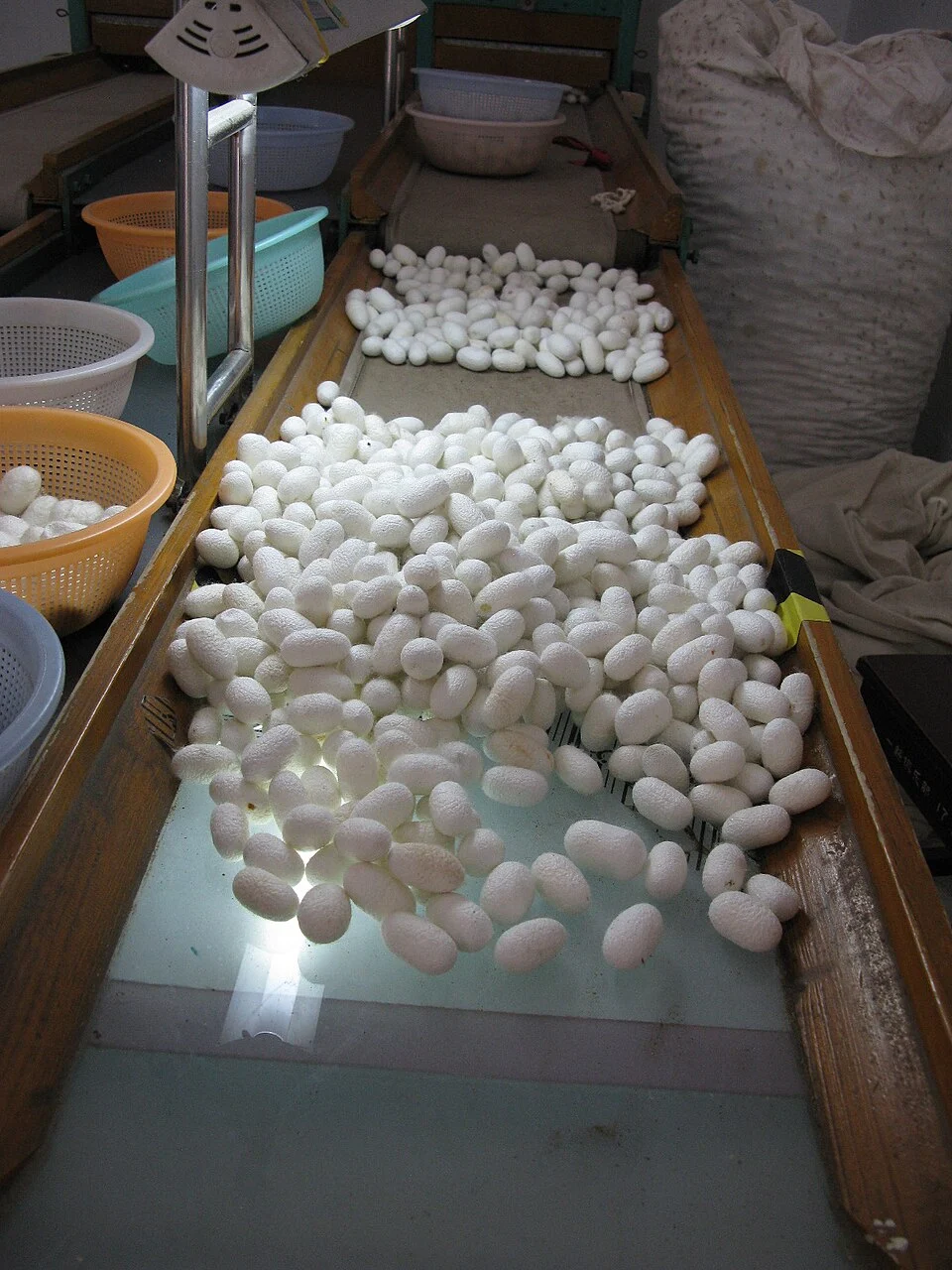
Qipao is not exclusively silk
Where to standComparisons of different fabrics in the exhibition archive.
Shanghai Museum’s interpretation includes cotton, lace and knitted materials. Thickness, stretch and pattern scale alter the silhouette; the way stripes or large flowers meet at seams reflects cutting choices. Shine does not prove silk, and a matte textile is not automatically inferior. Before purchasing, establish fibre percentages, lining and care. Ask whether a pale garment is transparent and whether the fabric requires particular pressing. Those details determine whether the garment will remain usable after the trip, beyond the appeal of the fitting-room image.
NoticeInspect pattern matching at one seam, then read the fabric label.
04
Fashion imagery and personally worn clothes
Where to standArchive displays placing advertisements beside garments.
Advertising reveals how sellers wanted to present women; an actual garment can preserve size, wear, alterations and evidence of storage. Both are useful, but they cannot substitute for each other. Ask whether ownership and purpose were recorded. Work, everyday use, ceremonial occasions and performance make different demands. Where records are absent, retaining uncertainty is more responsible than inventing a whole life from a floral pattern. This comparison also draws attention to how museum collections were formed and which ordinary garments may never have survived.
NoticeSeparate what the image promotes from what the object demonstrates.
From surviving clothes to present-day tailoring
Today qipao can serve weddings, performance, gatherings and everyday wear, with makers adjusting sleeves, slits, ease and fabrics. Historical references can coexist with new materials, but a promise of old Shanghai should be explained through specific choices. For travel commissions, clarify measurement, fittings, delivery date, alterations and shipping charges. If there is insufficient time for fittings, an appropriate ready-made garment with suitable alterations may be more practical. Explaining intended use helps the garment become part of life rather than a prop worn once for an attraction photograph.
Going further
Before you go
- Exhibition archive
- This temporary exhibition ran 23 December 2025–5 May 2026 and has ended
Being a good guest
- Ask about makeup and jewellery before fitting.
- Do not open fastenings on historic garments or touch exhibits.
- Explain intended activities and allow realistic making and alteration time.
- Ask before photographing wearers or work inside a shop.