In 30 seconds
- 1
The World Heritage property is a cultural landscape linking forests, old tea groves and traditional villages.
- 2
Local community knowledge and management, including that of Blang and Dai people, are part of the landscape.
- 3
Tea groves are working land and villages are homes; observation begins with permission.
Tea within forest, people within landscape
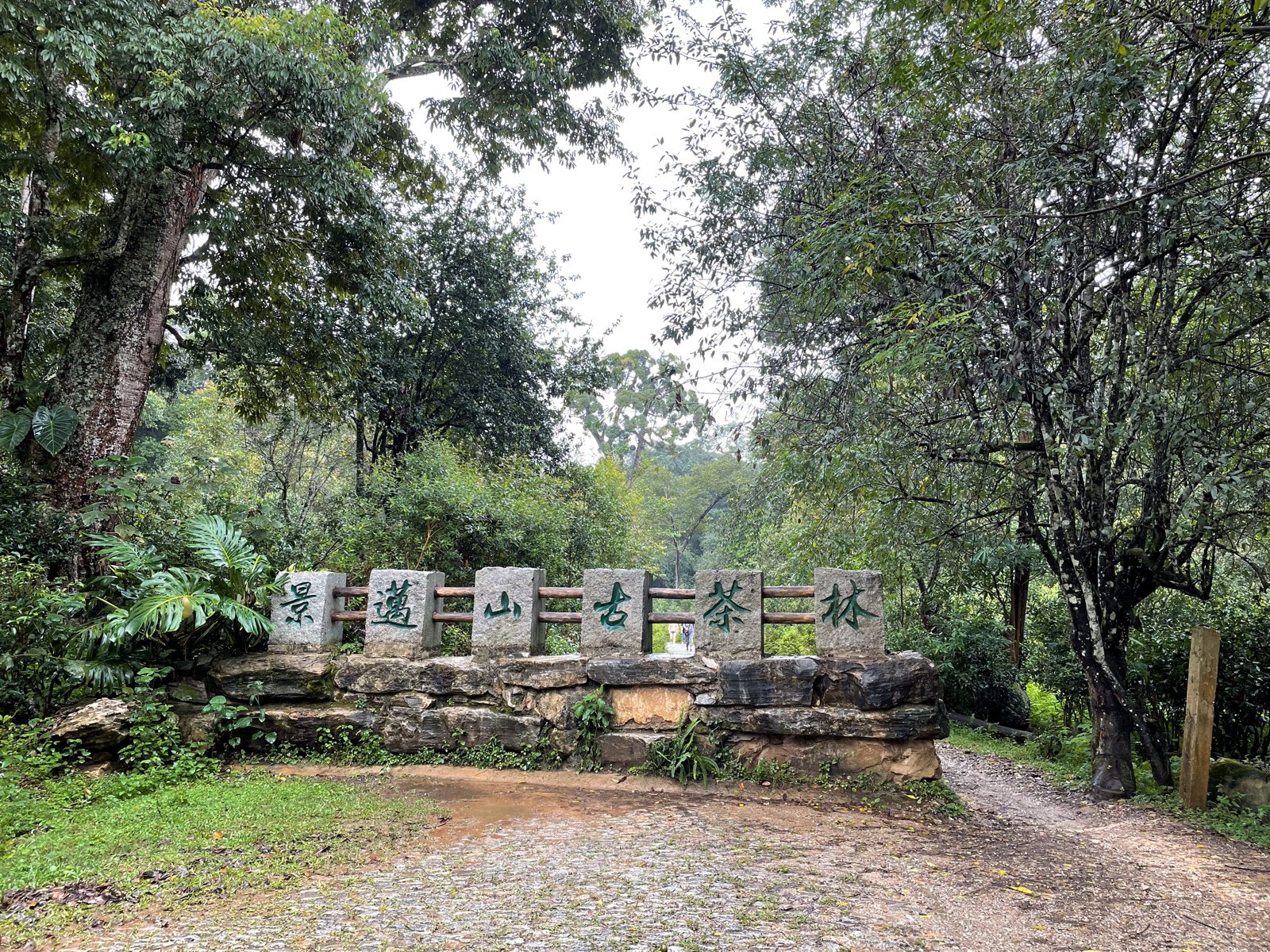
Jingmai’s old tea forest cultural landscape was inscribed in 2023. Its significance is not a spectacular age assigned to each tree but a long-developed land-use relationship among forests, tea groves, villages and other productive land. Tea grows beneath taller trees. Community knowledge, Tea Ancestor beliefs and management practices make this more than a collection of trees: it is a lived and worked landscape.
The National Forestry and Grassland Administration describes understorey cultivation using forest conditions and retained shade trees, producing vertical layers of trees, tea and herbs. Yunnan’s regulations give old trees and the cultural landscape specific protection. Read both ecological layers and human choices, maintenance and limits. This is not an untouched forest, and resident communities are not accessories to scenery.
On the spot
01
Look up, level and down
Where to standA permitted tea-forest path or public viewing point.
From a path, look at canopy, tea plants and then herbs, fallen leaves and ground cover. Heights indicate light, shade and moisture as well as visual depth. Understorey cultivation differs from clearing trees for uniform rows; the relationship between taller trees and tea is central here. One patch cannot represent the mountain. Describe canopy openness and ground cover rather than making instant ecological verdicts.
NoticeDescribe canopy, tea level and ground in three sentences without picking leaves.
02
Villages make tea forest a daily life
Where to standPublic village roads and spaces residents invite you into.
Observe how houses sit in relation to tea land and how drying, transport and hosting adjoin domestic life. Villages such as Wengji and Nuogan have particular communities and buildings, not one interchangeable “ethnic village” identity. Visible houses remain private homes inside; traditional forms may now accommodate guesthouses, tea shops and communication. Study a new use rather than dismissing change as insufficiently old.
NoticeFrom a public road, notice one place where home life and tea work adjoin.
03
Ask where this particular cup comes from
Where to standA tea shop offering tastings or a home by invitation.
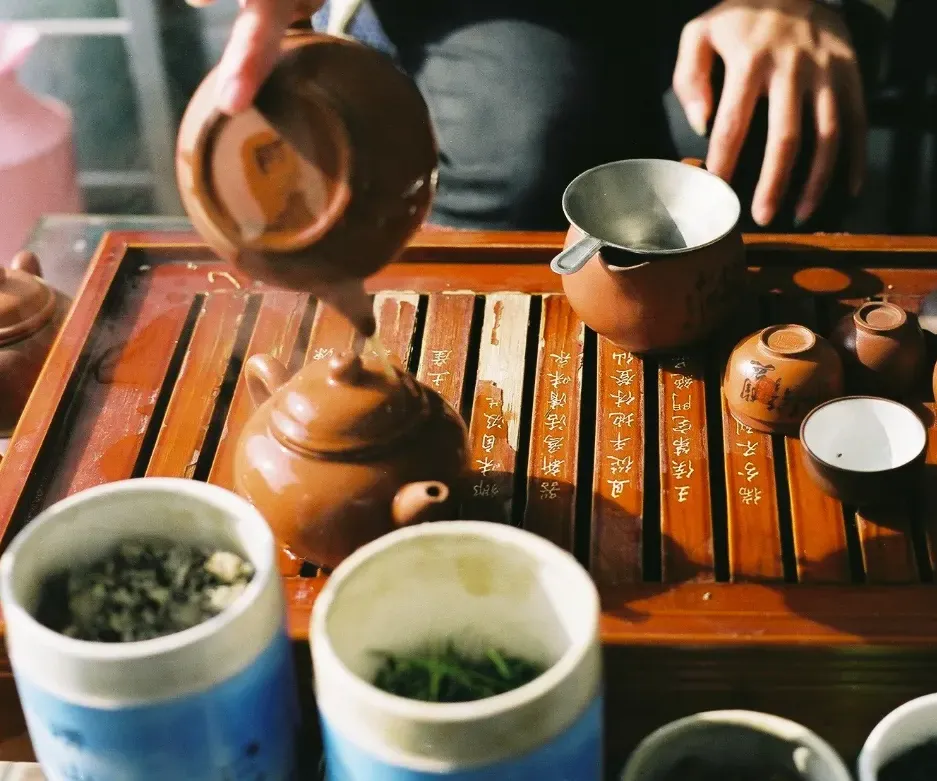
Ask about this batch’s origin, season and processing, distinguishing tree, fresh leaf and finished tea. The place name cannot guarantee every product’s age, quality or health effects; an “ancient tree” claim needs an explanation. Compare aroma, astringency and changes after swallowing as personal impressions. Before buying, clarify price unit, weight and packaging, recognising that hosting a tasting is work.
NoticeDescribe a cup in your own words, then ask one concrete production question.
04
Tea Ancestor belief is not an event catalogue
Where to standHeritage interpretation or a cultural space you are permitted to view.
Tea Ancestor belief and regard for plants and animals are important cultural elements. Use interpretation to understand their connection with land management, then listen to residents who wish to share. Public festivals and private rites have different boundaries; an online video does not establish a daily performance schedule. Belief can persist through daily agreements and conduct without always producing a photographable ceremony.
NoticeFind one protective practice in interpretation and compare it with visitor boundaries.
Protection faces new businesses and pressures
World Heritage status brings attention. Tea shops, lodging and online selling offer younger residents new businesses while bringing visitor pressure and building changes. Yunnan reports document tourism and digital commerce, but one business cannot represent every resident. Protection concerns ecological relationships and communities’ continued agency over work and homes.
Buying tea and staying locally can support businesses when terms are clear and access and harvesting boundaries are respected. The most valuable souvenir is not a handful of leaves taken from an old tree, but an understanding of the canopy, maintenance and community work that brings a cup to the table.
Going further
Before you go
- Tea-forest access
- Use permitted paths. Agree timing, activity and fees with the provider before joining picking, processing or a household tasting.
- Trip planning
- Choose the village you will stay in and transport from the valley before planning daytime observation; mountain roads and weather affect travel.
Being a good guest
- Do not pick leaves, climb trees or trample roots and undergrowth.
- Ask before entering houses or photographing domestic life.
- Respect community boundaries around rites and do not ask for a repeat performance.
- Clarify tasting and purchase prices and do not assume unlimited free hosting.
- Take rubbish away and use no open flames in tea forests.