In 30 seconds
- 1
Green tea depends on heat fixation, which limits enzymatic oxidation.
- 2
Longjing names a tea; West Lake Longjing also specifies origin. Flat leaves alone do not prove it.
- 3
Read the leaves, vessel and water before comparing aroma; price is only one measure.
How a leaf becomes different teas
UNESCO inscribed China’s traditional tea processing and associated social practices in 2022. The subject is a connected body of knowledge, from cultivation to sharing, rather than a quality award for every shop or packet. The six categories are best approached through processing. Chinese hongcha refers to what English calls black tea; heicha, or dark tea, has a different tradition involving further microbial transformation.
Shuangfeng brings leaf samples, historical vessels and a Longjing exhibition into one visit. Seeing processing before teaware helps explain why a tea culture cannot be reduced to one ceremony. Whether leaves are compressed, powdered or infused changes the equipment needed. Today’s loose-leaf brewing is a historical development, and one handsome tea setting cannot represent every Chinese region or period.
On the spot
01
Begin with shape, before grading
Where to standA Longjing sample, or dry leaves shown by a shop assistant.
Longjing’s flat profile is connected with pan processing: heat, hand movement and pressure affect both moisture and shape. Treat the leaves as worked material. Compare length, breakage and colour consistency. A high proportion of young buds does not make the tea everyone’s favourite, and cannot establish West Lake origin. When buying, ask about harvest season and specific production area together with the package label, rather than treating a fashionable seasonal term as the whole answer.
NoticeCompare one whole leaf and one broken piece before and after infusion.
02
The cup is an experiment
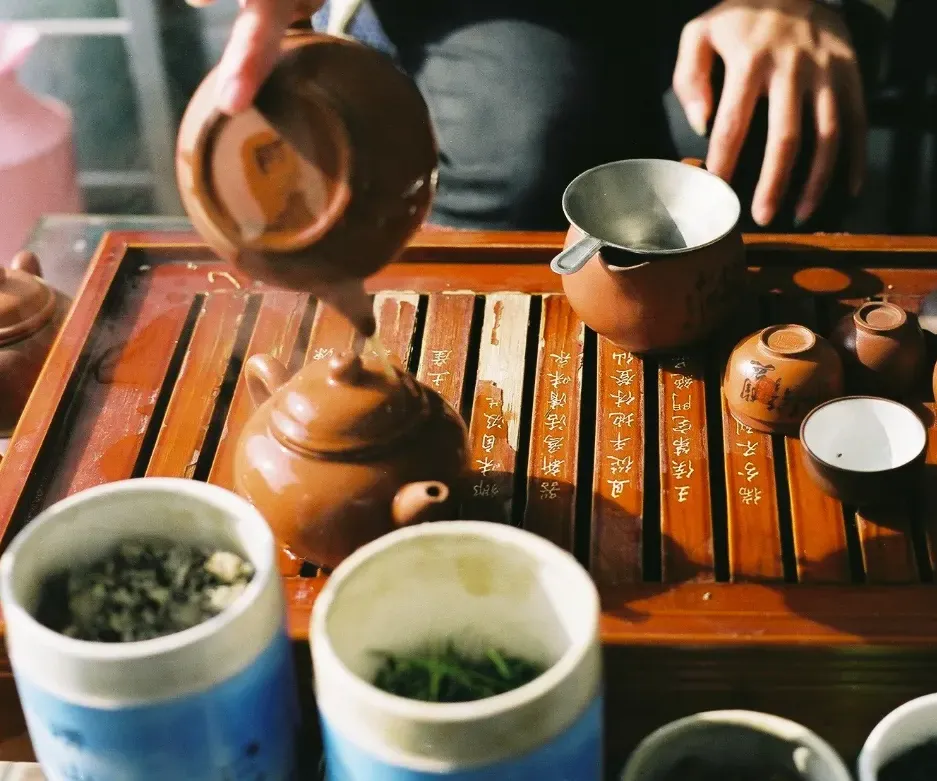
Where to standA tea table where staff can adjust the brewing water.
The same leaves change character with the amount of leaf, water and contact time. A long boiling-water steep is not required to make Longjing taste of something, nor is there one universal number of seconds for every batch. Try an unsweetened first sip once it is comfortable to drink. Separate aroma from bitterness and texture. A refill lets you notice how these components fade at different rates, rather than assuming all subsequent cups must taste identical.
NoticeGive the first infusion and its refill one descriptive word each.
03
Take aroma beyond the label
Where to standWet leaves after the first infusion.
Terms such as floral, bean-like or chestnut-like may describe an impression created through processing rather than an added ingredient. Your perception need not match the shop’s vocabulary. Smell dry leaf, warm wet leaf and the aroma released while drinking separately; they may differ. A historical vessel explains past practice, while an actual infusion provides sensory evidence. The two forms of understanding complement each other, but a tasting cannot prove what an ancient person experienced.
NoticeCompare two features—colour, smell or texture—with your companion.
04
The social meaning of a refill
Where to standA tea house or a host’s welcoming table.
Tea connects people in homes, workplaces, temples and tea houses. A host who refills your cup may simply be sustaining conversation and looking after guests. A paid presentation can be interesting for its arrangement of tools and gestures, but does not set rules for everyone’s everyday drink. You can politely state how much you want, when you need to leave and whether you wish to buy. Being a considerate participant matters more than reproducing a supposedly universal gesture.
NoticeThank the person refilling your cup and ask how this particular tea is best brewed.
A famous tea in a changing market
Longjing belongs to a local production landscape and also to modern gift, tourism and online markets. A spring tea field, an origin label and a host’s way of serving each communicate different kinds of value. A cup is a practical first investment in understanding. Learn whether you prefer a lighter infusion, a fuller texture or another processing category before buying an expensive packet; that knowledge remains useful long after the journey.
Going further
Before you go
Being a good guest
- Tea fields are working land: do not pick leaves or step between rows for photographs.
- Ask before handling samples and keep wet hands away from loose leaves.
- Establish whether tasting is charged before accepting it.
- Avoid presenting one set of tea manners as rules followed by everyone.