In 30 seconds
- 1
Tea is replenished through the meal; dim sum arrives in small shareable servings.
- 2
Tea charges and dishes may be billed separately.
- 3
Yum cha makes social time, but modern mornings also include commuting and takeaway.
What “one pot, two items” means
Guangzhou’s official accounts explain “one pot, two items” as tea with two servings of dim sum, later a shorthand for eating and talking together. The word items does not prescribe two individual shrimp dumplings. Tea can be replenished and dishes added in rounds, allowing conversation around small servings without waiting for a complete banquet. The morning practice has also expanded into lunch and afternoon service in many businesses, whose actual hours depend on their own menu.
Yum cha is organised by more than a list of foods: tea, hot water, seating, steamers and service make the meal possible. A bun carried while commuting and a bun shared at a table occupy different social situations. Comparing Guangzhou, Chengdu and Shanghai should not assign one rhythm to every resident of a city. Instead, ask whether a particular business encourages a quick departure or a long stay, whether food belongs to individuals or the whole table, and how its service supports that arrangement.
On the spot
01
Understand the tea charge
Where to standWhen choosing tea after sitting down.
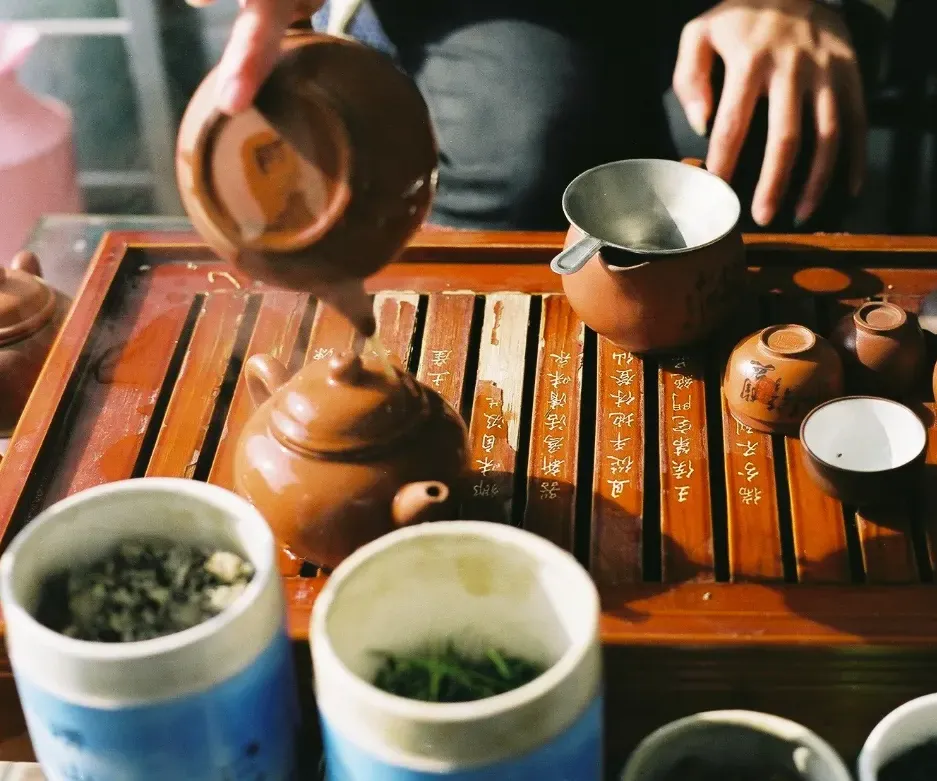
A tea charge may be per person and may vary with the tea chosen. Do not assume the first pot is a complimentary drink. Names such as pu’er, black tea and chrysanthemum indicate different profiles; menus may combine flowers and tea. There is no need to begin with the most expensive option. Ask for a suitable strength and how refills work. Pouring for others can express attention, yet a newcomer can simply ask a companion or server for help.
NoticeConfirm whether the tea is priced by person or pot.
02
The steamer is a sharing unit
Where to standAs your steamers arrive.
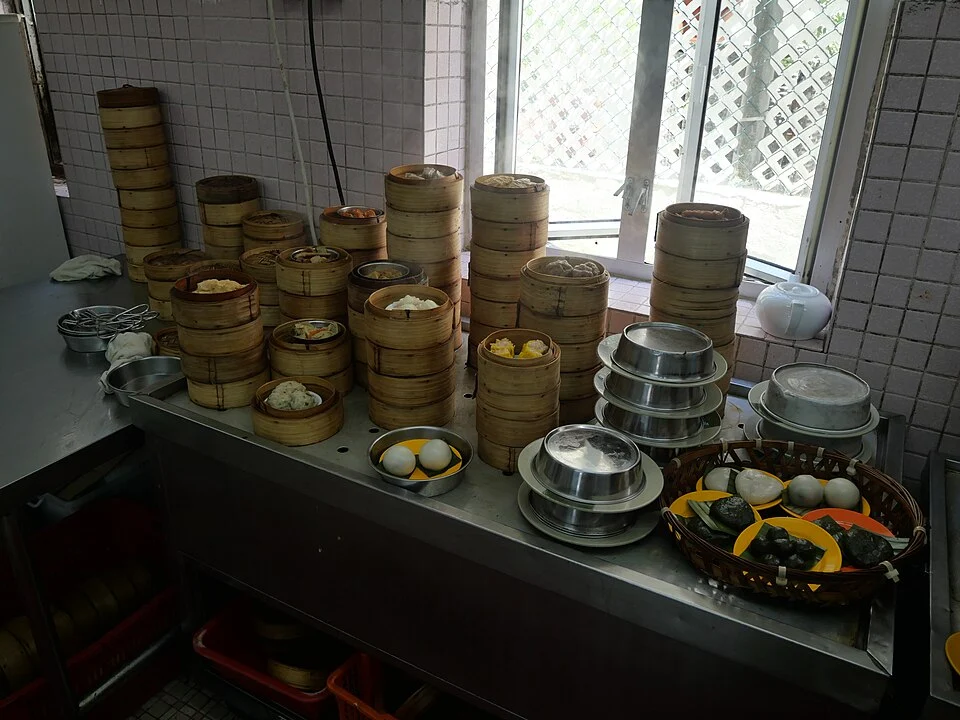
Shrimp dumplings, siu mai, roast-pork buns and egg tarts often introduce yum cha, but steaming, baking, pan-frying and frying create different textures. A translucent wrapper, airy bun and layered pastry deserve separate attention to material and heat. The number of pieces per serving is set by the business. Try three methods rather than three similar steamed fillings, and consider how portions divide between companions. Ordering enough to photograph an overflowing table can obscure the meal’s practical scale.
NoticeCompare the exterior and centre of one steamed and one baked dish.
03
Ordering methods carry memory
Where to standThe order sheet, service counter or table service.
Some tea houses use paper forms, others digital menus or collection counters; an old photograph of trolley service does not establish what every business must provide today. Labels such as small, medium and large may be price categories rather than dimensions. Read the actual price. Order a modest first round, then add more after seeing how service moves. Notice when staff record dishes and remove empty steamers: these small systems help a leisurely meal remain manageable for the business.
NoticeUse the first round to judge serving sizes before ordering again.
04
Compare time without stereotyping cities
Where to standAt the end of the meal, and at another breakfast business.
People discussing work, taking away food or eating with children may use the same tea house at the same time for very different purposes. In a Shanghai breakfast shop or Chengdu noodle business, notice whether food is carried or brought to a table, where customers queue and how scarce seats are. These are observable differences. Saying everyone in one city is relaxed and everyone in another is hurried erases jobs, ages and personal schedules. Breakfast reveals specific pieces of urban life, not a citywide personality test.
NoticeCompare time spent, sharing arrangements and service sequence.
Changing menus, continuing gatherings
Guangzhou’s dim-sum programmes bring tea-house foods into markets, hotels and new dining occasions, showing an evolving audience. Novel shapes or ingredients do not automatically improve on older recipes, while an established name cannot prove how every dish was made. Ask about one item’s wrapper, preparation or adaptation for takeaway. The lasting result of the meal can be an understanding of sharing, time and service as well as a list of things you enjoyed eating.
Going further
Before you go
- Setting
- Guangzhou tea houses serve tea and dim sum by menu; establish yum-cha service hours, tea charges and any minimum spend
- Time
- Allow 60–90 minutes for a first shared yum-cha meal; order in rounds
Being a good guest
- Do not take another table’s pot, chairs or utensils.
- Do not impose a finger-tapping gesture; spoken thanks works well.
- Use serving utensils and keep discarded bones on your own designated plate.
- Keep service paths clear and avoid close-ups of strangers eating.