In 30 seconds
- 1
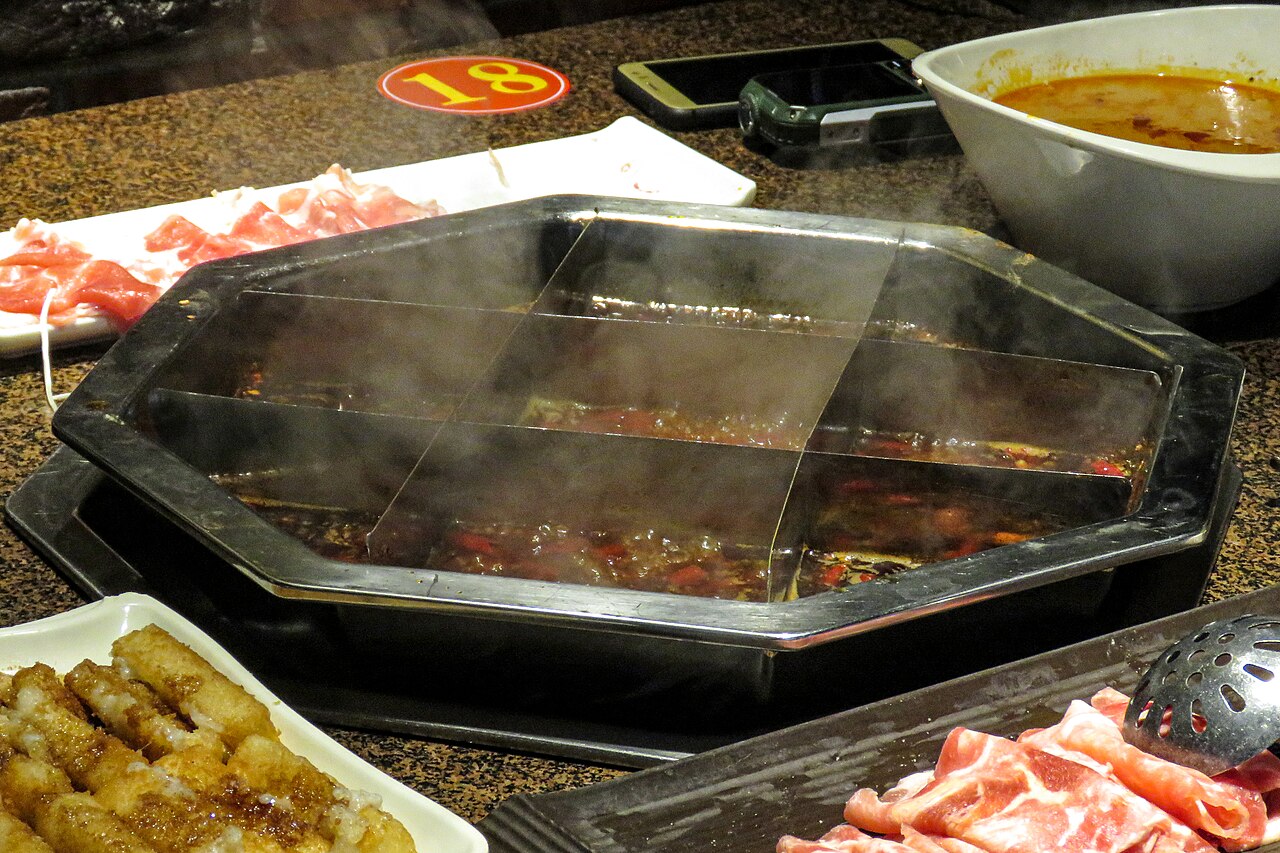
Nine grids generally share a broth; they are not nine separate flavours.
- 2
Numbing and chilli heat are different sensations; the broth may contain beef fat.
- 3
Agree on the group’s preferences and restrictions before ordering ingredients.
The shared rhythm of one pot
Sichuan and Chongqing hotpot are associated with spicy, numbing broth and cooking throughout the meal. Chongqing menus often give prominence to ingredients valued for texture, such as tripe and duck intestine. Popular dockside origin stories should not be treated as an exact reconstruction. The visible structure is easier to understand: heat sits at the centre, ingredients arrive uncooked and diners constantly organise waiting, cooking and eating. Every participant affects the pace of the table.
A shared pot divides work differently from a finished stir-fry. The kitchen prepares broth and ingredients; diners participate in their final cooking and distribution. Eating skilfully means more than tolerating greater chilli heat. It includes adding manageable batches, recognising ingredients and attending to companions’ needs. There is considerable variation between businesses within each city, so a city name cannot stand in for the recipe of the pot in front of you.
On the spot
01
Choose a pot the group can share
Where to standBefore the broth arrives.
Ask what the base contains—beef fat, vegetable oil or another preparation—then whether a divided or separate mild pot is available. Colour alone cannot establish heat level; staff know the recipe. Mild broth may contain meat stock, and partitions do not eliminate every form of cross-contact. State any strict dietary requirement before ordering so the restaurant can explain what it can provide. Choosing the group’s shared base is the first act of consideration, not a test of bravery.
NoticeName one wanted and one unwanted ingredient each before choosing the broth.
02
The grids organise space and heat
Where to standFrom your seat as the broth begins to boil.
Partitions help keep ingredients from drifting and can make it easier to use areas with different boiling intensity. The base is generally connected underneath: the broth remains shared. Think of the grids as working areas rather than private territories. Ask how this restaurant uses them, do not presume a section permanently belongs to you and do not lift out food somebody else is waiting for. As the heat changes, the previously quiet part of the pot may behave differently too.
NoticeIdentify the strongest and weakest boiling areas and ask how to use them.
03
Read the menu through texture
Where to standThe raw ingredient plates and cooked food in your own bowl.
Tripe, duck intestine, tofu skin, lotus root and potato do not simply absorb different amounts of chilli. They offer distinct resistance, softness and capacity to hold broth. Order for variety in texture as well as quantity instead of collecting every offal item on a popular list. A catchy dipping-count slogan is not a universal cooking instruction for every thickness or preparation. Ask staff to demonstrate the restaurant’s ingredients and distinguish adequate cooking from a preferred texture.
NoticeCompare a soft ingredient and a crisp one cooked in the same pot.
Local flavours, changing tables
Divided pots, individual portions, selectable heat and numerous sauces allow hotpot to serve families, travellers, solo diners and chain businesses. These changes do not automatically erase older practices, nor does the fiercest flavour become the only authentic one. Notice how a restaurant explains unfamiliar ingredients, prices its broth and additions, and accommodates different preferences at one table. Those arrangements reveal contemporary food life more directly than nostalgic decorations alone.
Going further
Before you go
- Meal planning
- Hotpot restaurants in Chengdu or Chongqing charge by menu; broth, sauce and ingredients may be priced separately
- Before ordering
- Confirm heat level, fat and stock ingredients, and availability of a separate mild pot
- Time allowance
- Allow 90–120 minutes for a shared dinner; this is a planning suggestion, not a restaurant package
Being a good guest
- Do not make chilli tolerance a test of courage or cultural belonging.
- Separate raw-food tools from personal utensils and follow staff’s cooking guidance.
- Tell companions before adding ingredients; cook manageable batches.
- Do not enlist strangers at another table or photograph them eating close up.