In 30 seconds
- 1
The wall is not an isolated line. Along an open section, connect terrain, towers, passages and repair to understand a defensive landscape.
- 2
Identify one turn and one place where terrain blocks a sightline.
- 3
Note changes in height and direction when entering and leaving a tower.
A way into the subject
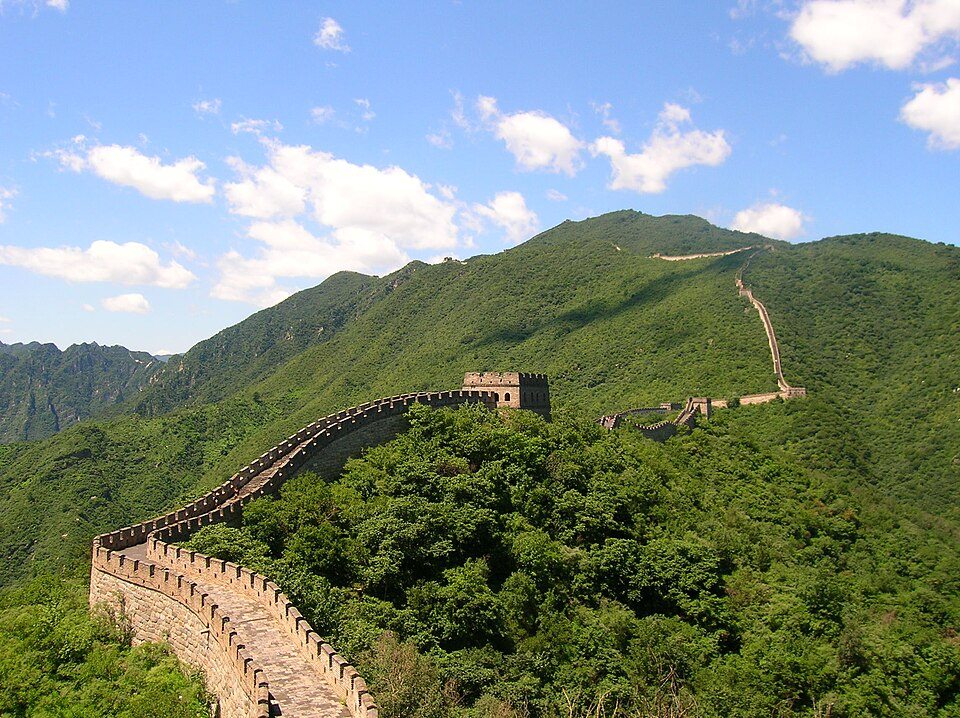
The Great Wall includes defences from different periods and regions, not a building completed by one emperor at one time. The World Heritage account describes its long formation and military system. Familiar Beijing masonry sections are closely associated with Ming defence. Mutianyu permits close study over a short distance, but does not represent every earthen, stone or ruined section elsewhere. Establish which section you are seeing before discussing dates and uses. Its vast scale is not a single length you can understand from a scenic walkway. Separate a landscape photograph into wall, towers, mountain and routes before looking for grandeur.
Ramparts carry people along a ridge; towers supply spaces for observation and defence; gates and passages control crossing. Terrain helps defence while constraining transport and movement. Visitor paths, lifts, railings and replacement masonry belong to later layers. They cannot all be labelled Ming originals, nor do repairs make the monument worthless. Distinguish defence from visitor infrastructure and consider garrisoning and supplying this terrain without modern transport. Treat this as a question rather than assigning an undocumented function to a particular tower.
On the spot
01
Read the mountain before the wall
Where to standA safe, open viewpoint.
Trace the ridge, turns and depressions. Terrain affects sight, movement and construction. Ask which neighbouring sections a tower can see and which the mountain hides. Defence becomes a spatial problem. Present trees and paths need not reproduce historical vegetation or roads, so one photograph cannot reconstruct the whole military environment. Separating visible evidence from questions needing research makes observation more precise.
NoticeIdentify one turn and one place where terrain blocks a sightline.
02
How towers and ramparts connect
Where to standAn open tower and walkway.
See how entrances, levels, openings and walkway connect, then compare the direction of windows and loopholes. Their relationships are more dependable than naming a function for every opening. Does movement through the tower change direction or height? Avoid sketching in a crowded doorway; compare from memory once clear. Defensive structures also shape current visitor flow. These different uses make the same opening raise different questions.
NoticeNote changes in height and direction when entering and leaving a tower.
03
Masonry records construction and repair
Where to standClose enough to observe without touching.
Compare block sizes, mortar, joints and weathering. Regular new surfaces may show repair, but irregular old surfaces cannot be dated exactly by colour. Drainage and wall-top form affect how water leaves the structure. Never pick at mortar or make rubbings. Close observation discovers differences worth checking against interpretation rather than declaring every brick a relic of a named dynasty.
NoticeDescribe one change in material or joint pattern without guessing a date.
04
Place the wall within a larger system
Where to standThe visitor map and landscape.
Connect a section with gates, routes and valleys without leaving open areas to seek supposedly untouched wall. People, supplies and information moved between places; one viewpoint cannot show a complete system. Lift lines on a modern map indicate visitor transport, not military roads, and visitor tower numbering is not a garrison list. Read service maps separately from historical interpretation to avoid mistaking convenient present-day symbols for evidence of the past.
NoticeSeparate visitor transport from wall structures on the map.
How the tradition reaches the present
Tourism makes Mutianyu accessible while creating wear, crowding and maintenance needs. Repaired open sections, closed remains and walls elsewhere offer different conditions; off-trail exploration is not a measure of authenticity. Conservation involves documentation and upkeep, not merely empty photographs. Compare materials, slopes, tower spacing and condition elsewhere instead of ranking beauty. Seasonal photographs of one location also help distinguish light and vegetation from actual structural change.
Going further
Before you go
- Admission and transport prices
- Adult regular admission40yuan or postcard admission45; return shuttle15; return cable car140. Chairlift/toboggan tickets are separate.
- Location
- Mutianyu Village, Huairou District, Beijing; start at the visitor centre.
Being a good guest
- Stay on open paths and respect barriers.
- Do not carve, remove masonry or climb battlements.
- Yield on platforms and keep narrow doorways clear.
- Carry out rubbish and follow fire rules.