In 30 seconds
- 1
Buddhist temples, mosques and popular-religion sites follow different traditions and cannot share one assumed protocol.
- 2
A heritage area open to visitors does not imply access to every worship space.
- 3
You can understand architecture without joining a rite; participation depends on an invitation and your own wishes.
Heritage still in use
Quanzhou’s World Heritage property is a group of evidence from the Song-Yuan maritime trading system, including religious buildings. Kaiyuan is Buddhist, Qingjing Mosque records Muslim merchants and communities, and Mazu traditions connect coastal people with maritime life. Beyond moving goods, these places reveal people migrating, living, praying and organising. Coexistence does not erase distinct boundaries or traditions.
Two readings are needed. Buildings, inscriptions and dates explain history; incense, prayer arrangements and signs show present use. Display and worship may share a courtyard or occupy separate areas. Establish where viewing is welcome and where permission is needed rather than copying another tourist’s gestures. Understanding a religion does not require pretending to practise it; leaving room quietly is already meaningful.
On the spot
01
Read boundaries at the entrance
Where to standPublic entrances such as Kaiyuan Temple’s.
Signs explain access, restrictions and events, while threshold and courtyard mark a change from street life. Lower your camera and notice routes for worshippers and buildings viewed only from outside. Dress, footwear and photography rules vary; Buddhist habits should not be carried automatically into a mosque. Ask a specific question such as “May I enter here?” instead of guessing a complete protocol.
NoticeIdentify and follow one requirement issued by the site before entering.
02
Between pagodas and courtyard
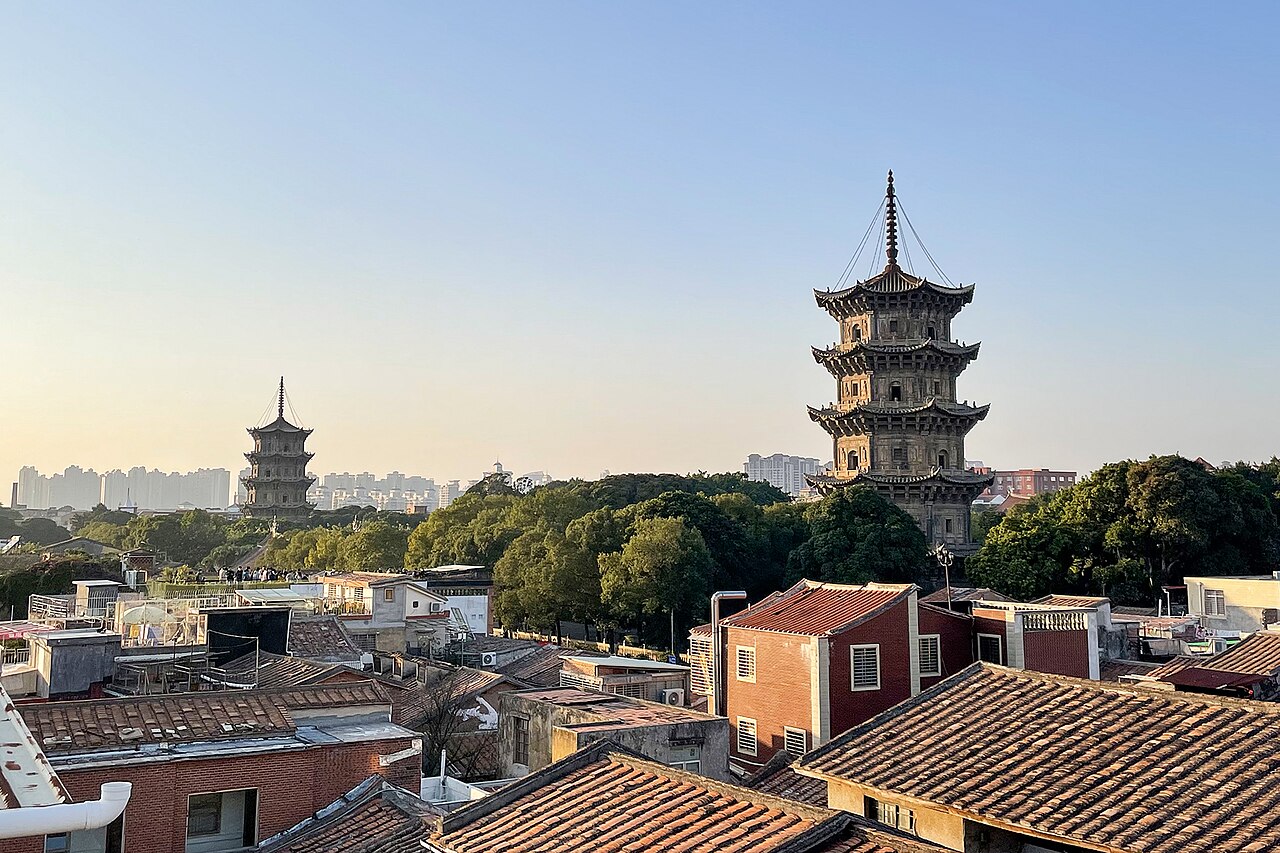
Where to standOpen courtyards and areas near Kaiyuan’s twin pagodas.
An axial courtyard with pagoda courts on either side makes Kaiyuan more than a façade. Compare scale among towers, halls and trees, and how people move inward from the street. Carvings may carry cross-cultural evidence, but a motif alone does not reclassify the whole temple’s religion. Object, placement and building history need to support interpretation. A broad spatial view and permitted close study complement each other.
NoticeStudy the courtyard first, then one carving with a clear interpretation.
03
Arches and inscriptions are located evidence
Where to standThe heritage area of Qingjing Mosque open to visitors.
Founded in 1009, Qingjing Mosque owes important elements of its surviving arrangement to a 1310 restoration. Stone gateways, pointed arches and inscriptions illuminate West Asian traditions in a port city. They are not merely an exotic scene: the mosque belongs to Muslim community history and retains a religious identity. Read restoration dates separately from the original foundation; surviving fabric is not automatically the same age as the site.
NoticeFind foundation and restoration dates and identify what each describes.
04
Wishes for safety bring maritime life into town
Where to standA public Mazu display or a temple area where viewing is permitted.
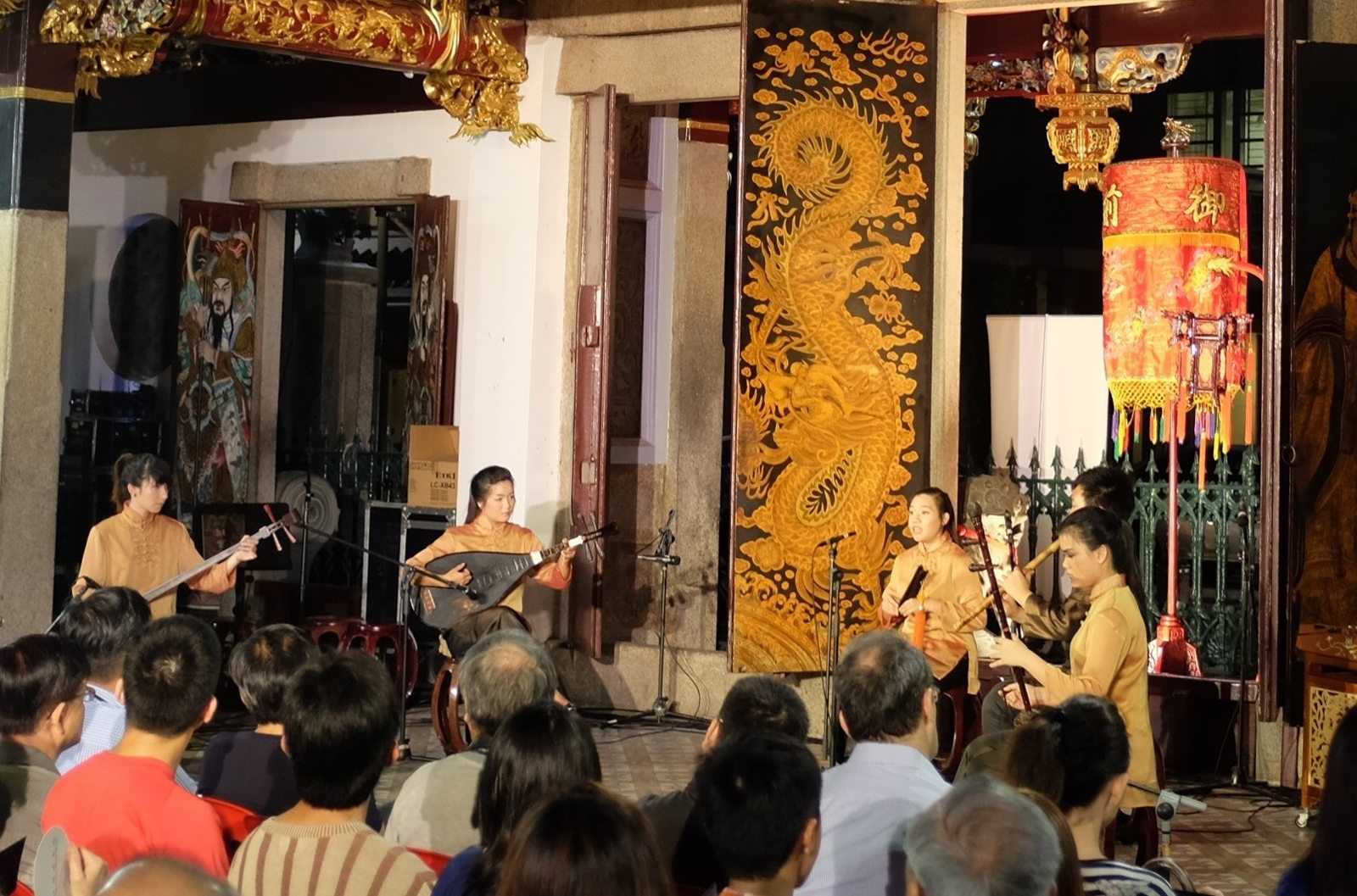
Mazu belief spread among coastal communities and Chinese people overseas through oral traditions, ceremonies and everyday wishes. Images, offerings and name boards reveal forms of expression, but a worshipper’s gesture cannot disclose occupation, family concerns or an entire belief system. Offerings and incense are not tourist props. If no public activity is taking place, use interpretation rather than asking for a staged rite.
NoticeFind imagery related to maritime life and read its label without interrupting prayer.
Coexistence requires attention to difference
Quanzhou’s religious remains reflect long histories of mobility and urban growth; repair, display and management now shape how those histories are seen. Heritage status attracts attention and may increase pressure on worship spaces. Respect becomes practical through lowering a camera, leaving room for rites and following each site’s rules.
A Buddhist carving and a mosque gateway invite comparison without a contest over which is “more Chinese” or “more authentic”. Describe materials, structure and documented dates first, then understand community use. This approach recognises cultural exchange without turning living people into historical scenery.
Going further
Before you go
Being a good guest
- Do not cross offering tables or touch sacred images, inscriptions or ritual objects.
- Ask before photographing worshippers and put cameras away where photography is prohibited.
- Dress respectfully and follow the specific clothing requirements of the mosque or other site.
- Do not treat incense or offerings as props or press companions to join a rite.
- Remain quiet during services, chanting or prayer and leave routes and ritual space clear.