In 30 seconds
- 1
The base is a place of husbandry, breeding and research, distinct from wild habitat.
- 2
Conservation also concerns mountain forests, bamboo, population connections and many other species.
- 3
Resting, going indoors or leaving view are legitimate animal needs.
An animal and an ecosystem
The Chengdu base offers close observation while undertaking research in breeding, healthy feeding and genetic-resource conservation. Visitors see a managed environment where food, veterinary care, space and monitoring contribute to husbandry. One feeding episode or enclosure cannot represent all wild life, and visitor-pleasing interaction is not conservation’s main purpose. Observation begins by recognising an animal’s own rhythm.
The Sichuan World Heritage sanctuaries protect a wider mountain ecosystem including Wolong, Siguniang and Jiajin areas with rich plant and animal life. Pandas are a compelling flagship rather than the only species that matters. Fragmented habitat, small populations and connectivity in the wild relate to, but differ from, captive breeding, health and genetic management. Distinguishing them connects a visible panda with distant forests.
On the spot
01
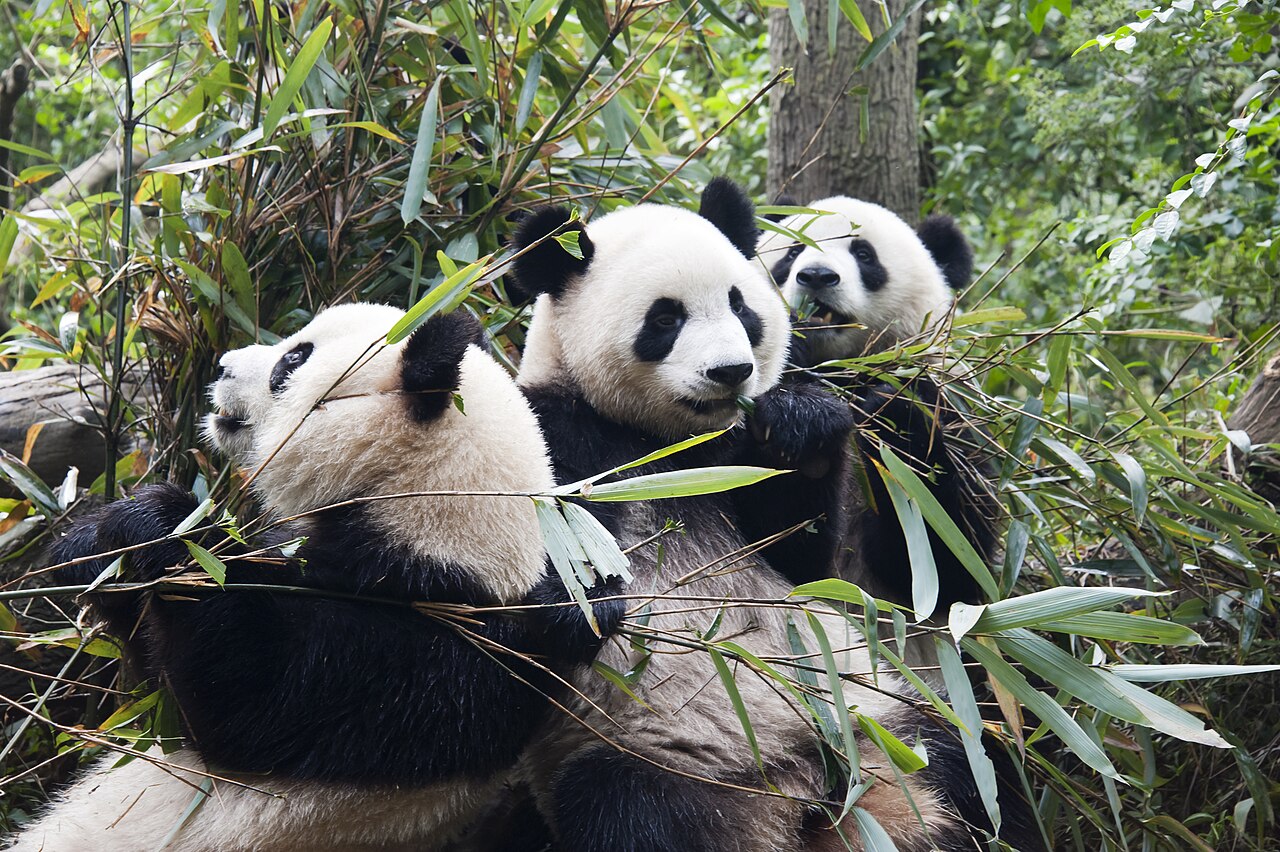
Watch how a mouthful of bamboo is handled
Where to standA visitor viewing area at the required distance from barriers.
Instead of waiting for a raised face, watch selection, holding, biting and repositioning of bamboo. A sequence reveals the cooperation of body and food better than a photograph. Individuals, ages and circumstances differ; slow eating or not eating during a visit does not establish illness. Staff manage food provision, so visitors should not add snacks. Quiet attention to movement and time teaches more.
NoticeWatch for a minute and record three feeding actions in sequence.
02
Rest is worth observing
Where to standA public viewing area where you do not obstruct others.
A panda may lie down, sleep, shift position or retreat indoors. Calling this a failure to perform turns observation into impatience: animals are not actors scheduled by tickets. Notice shade, climbing features and resting places without inferring personality from one posture. Heat, individual condition and management affect visibility. Interpretation remains valuable even when an animal is out of view.
NoticeRecord the resting place and its relationship to sun, shade and nearby features.
03
Care and research exceed a birth count
Where to standThe base’s educational displays and public research information.
Published research covers reproduction, nutrition, health and genetic resources. Displays can turn conservation into questions about life-stage care, population relationships and genetic information. Not every project appears on the visitor route, and unseen work need not be turned into speculation. Reading one specific research aim explains the institution more effectively than following a celebrity animal’s name alone.
NoticeIdentify one research question in interpretation rather than only an animal’s name.
04
Look from the enclosure back to mountain forest
Where to standHabitat maps and ecological interpretation.
Separate mountain habitat and protected areas from the city base on a map, then read about bamboo and other species. Forest protection concerns vegetation, spatial continuity and relationships among living things. Landscaping is not a substitute for wild forest, nor does captive population growth solve every habitat issue. Connectivity and isolation turn affection for pandas into long-term land management and research.
NoticeFind the city base and a wild reserve and explain their different roles.
An appealing image can begin deeper understanding
Panda imagery attracts attention but can concentrate it on names, expressions and short videos. Enjoy the appeal and ask one further question about food, environment or the distinct problems of research and wild protection. Avoid judging health and care from a brief clip; long-term observation and professional records have their roles.
Distinguish the Chengdu base, facilities around Dujiangyan and wild protected areas; addresses and tickets are not interchangeable. Give the base a separate half-day or longer and choose a manageable route instead of running after a particular panda. Animal activity cannot be guaranteed; visit quality depends more on how you observe.
Going further
Before you go
Being a good guest
- Do not feed animals or extend food, toys or selfie sticks through barriers.
- Do not tap glass, shout to wake animals or use flash.
- Share viewing positions without running after animals or climbing barriers.
- Keep paths and planted areas clean and use designated bins.
- Follow interpretation and staff guidance rather than online celebrity-panda chasing routes.